
Why Construction Workers Face Life-Threatening Risks Every Day
Construction injury incidents are a serious workplace safety concern in the United States. The construction industry, while vital to our economy, is consistently ranked among the most dangerous occupations. The Bureau of Labor Statistics reported that nearly 20% of all workplace fatalities in 2021 occurred in construction.
Key Facts About Construction Injuries:
- 1,056 construction workers died in workplace accidents in 2022.
- Falls account for 36.4% of all construction fatalities.
- Over 200,000 construction workers suffer non-fatal injuries requiring medical treatment annually.
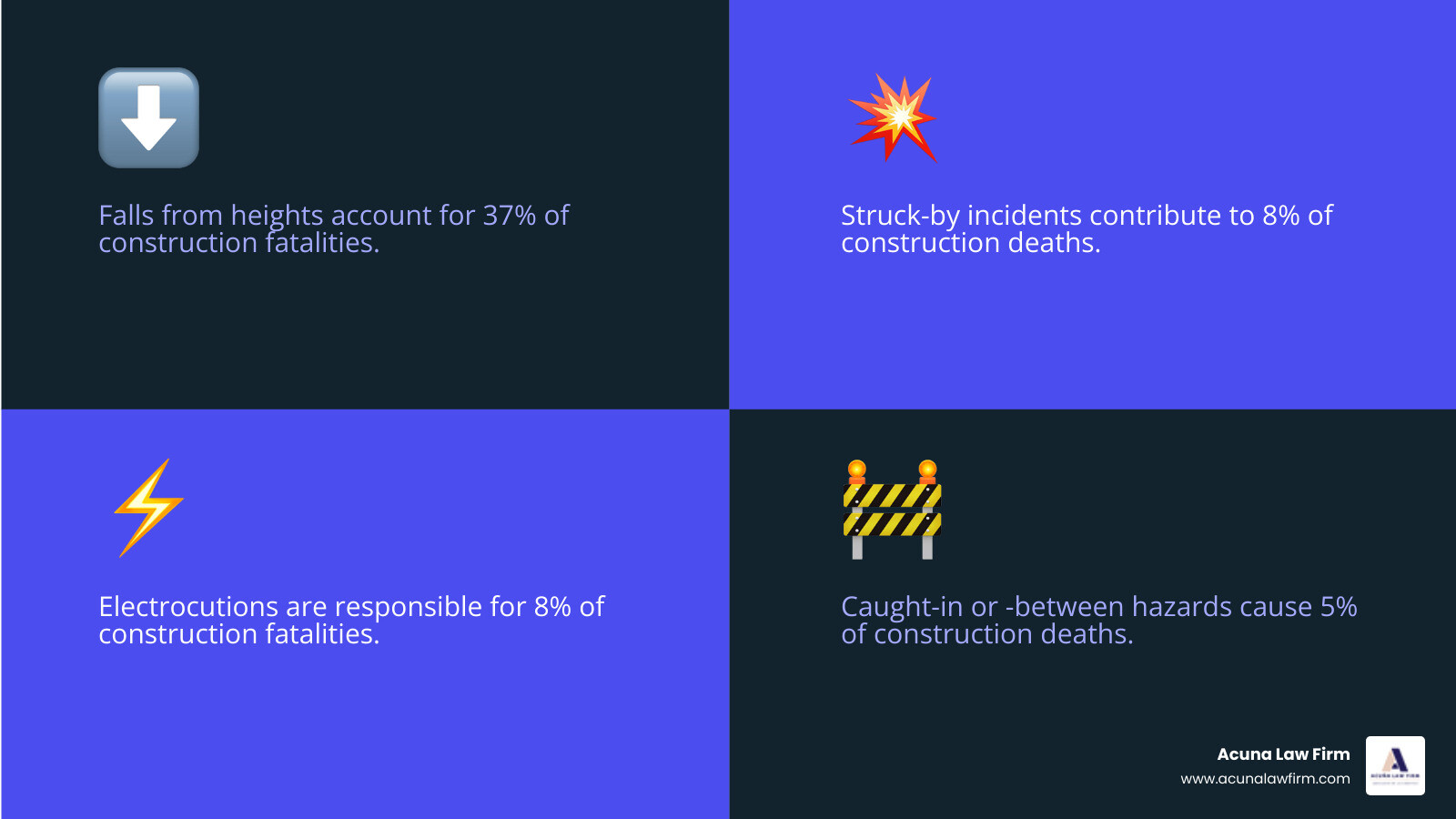
- The “Fatal Four” (falls, struck-by incidents, electrocutions, and caught-in/between hazards) cause 65% of all construction deaths.
- Small employers with fewer than 20 workers account for 75% of fatal falls, despite employing only 39% of the workforce.
Each statistic represents a worker who suffered a life-changing injury or never came home. Many survivors face permanent disability, extensive surgery, and the loss of their careers.
Fortunately, most construction injuries are preventable. Understanding the hazards and taking proper safety precautions can save lives. When accidents happen due to negligence, injured workers have legal options to seek compensation for medical bills, lost wages, and pain and suffering.
Si prefiere leer esta información en español, ofrecemos servicios bilingües para ayudarle a entender sus derechos después de un accidente de construcción.
The ‘Fatal Four’: Leading Causes of Construction Deaths
OSHA found that nearly 65% of all construction deaths in 2021 came from just four types of accidents. Known as the “Fatal Four,” these incidents are almost entirely preventable. Employers have a legal and moral responsibility to protect workers from these dangers, and workers have the right to a safe job site.
Understanding these four hazards is the first step toward prevention. For comprehensive guidance, OSHA provides detailed resources at The “Fatal Four” leading causes of construction deaths.
1. Falls from Heights
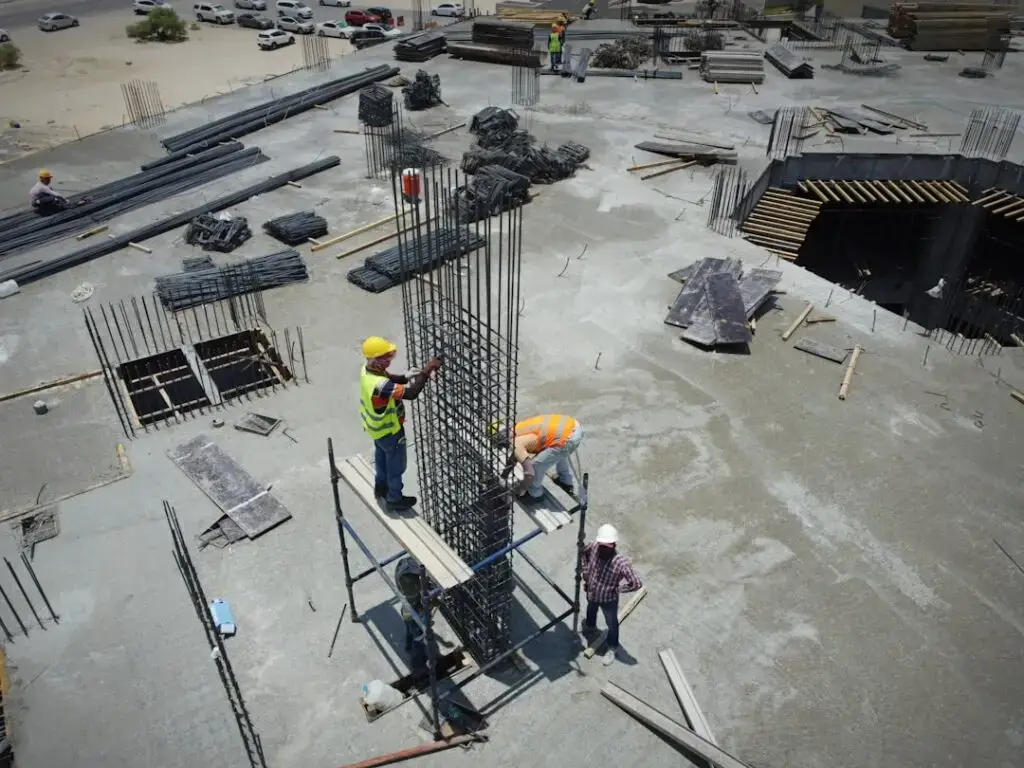
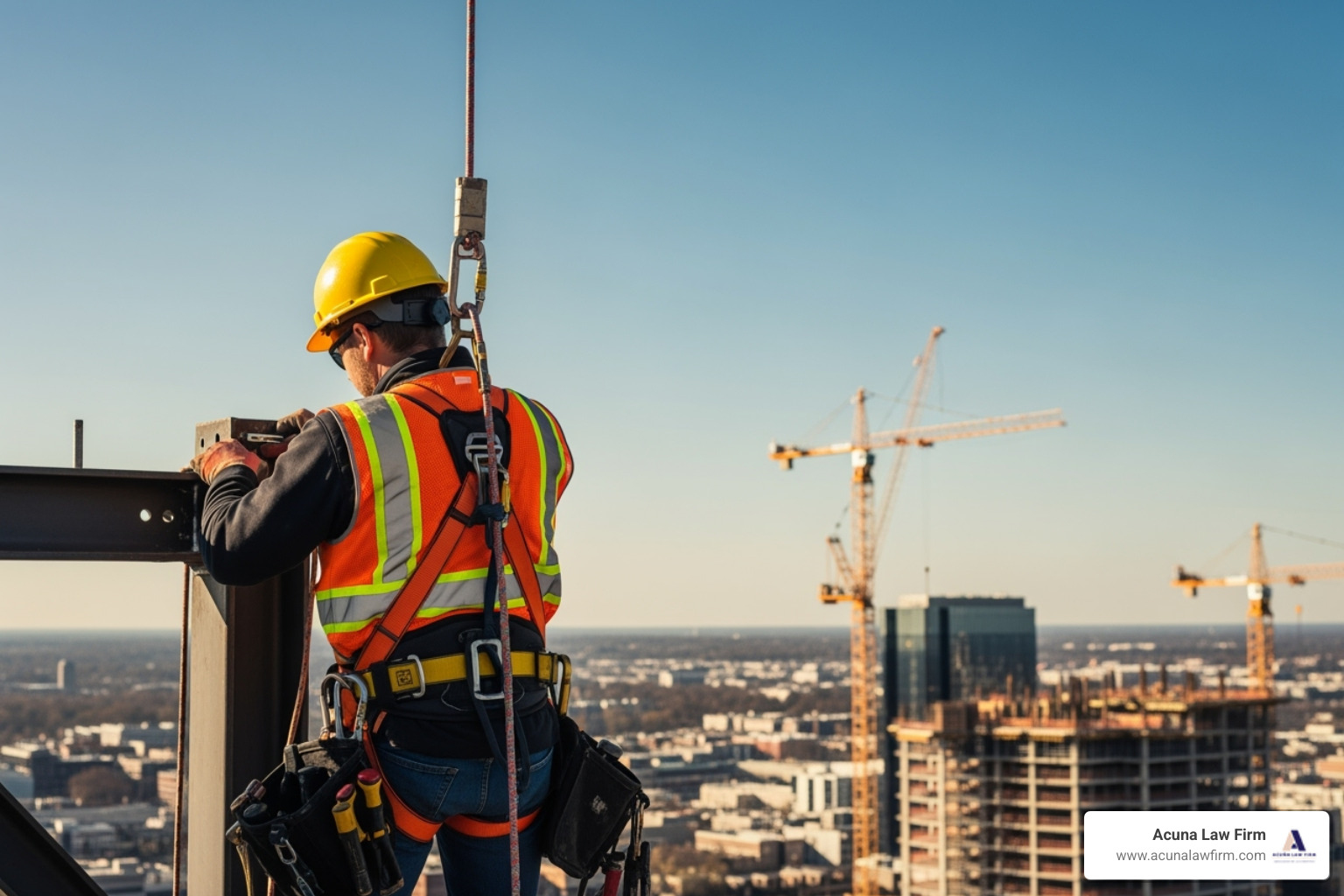
Falls are the number one killer of construction workers, accounting for 37% of all construction deaths in 2021. Workers are most vulnerable on improperly assembled scaffolding, unsecured ladders, roofs without edge protection, and uncovered floor openings. Notably, companies with fewer than 20 employees accounted for 75% of fatal falls between 2015 and 2017.
OSHA requires fall protection for any work performed 6 feet or more above the ground. Prevention includes:
- Guardrails around liftd platforms
- Safety nets below work areas
- Personal fall arrest systems with full-body harnesses and secure anchor points
Proper training on using this equipment is essential, as are regular inspections of ladders and scaffolding. The OSHA standards for fall protection provide exact requirements.
2. Struck-By Incidents
The second-leading cause of death, struck-by incidents, killed 8% of construction workers in 2021. These accidents occur when workers are hit by falling tools or materials, swinging crane loads, flying debris from power tools, or construction vehicles.
The dangers are multi-directional. A dropped tool can become a deadly projectile, and the large blind spots on heavy equipment can easily hide a worker from an operator’s view.
Prevention starts with the basics:
- Hard hats are mandatory.
- Toe boards and debris nets on liftd areas catch falling items.
- Backup alarms, spotters, and exclusion zones are critical around heavy equipment.
- Workers must maintain situational awareness, staying clear of overhead loads and moving vehicles.
The CPWR resources on struck-by hazards offer detailed guidance on protection.
3. Electrocutions
Electrocutions caused about 8% of construction deaths in 2021. Contact with high-voltage power can cause severe burns or instant death. Common hazards include overhead power lines, damaged wiring, frayed power tool cords, and wet conditions near electrical equipment.
Prevention is critical because these accidents happen in an instant. Key safety measures include:
- Lockout/tagout procedures to de-energize circuits during work.
- Use of insulated tools, gloves, and boots.
- Assuming all power lines are energized and maintaining a safe distance.
- Regular inspection of all electrical equipment for damage.
The OSHA electrical standards for construction provide comprehensive safety requirements.
4. Caught-In or -Between Hazards
Accounting for about 5% of construction deaths, caught-in or -between hazards occur when workers are squeezed, crushed, or trapped by equipment or collapsing materials. This includes being caught in moving machinery, buried in trench collapses, or crushed between vehicles and walls.
Trench collapses are particularly deadly, as they can happen without warning and bury workers under tons of soil.
Prevention requires vigilance and proper planning:
- Trenches need sloping, shoring, or shielding systems.
- All machinery must have proper guards over moving parts.
- Lockout/tagout procedures prevent machinery from starting unexpectedly.
- Materials must be stacked securely to prevent collapse.
OSHA’s guidance on OSHA control measures for caught-in hazards details how to prevent these crushing injuries and deaths.
The Fatal Four aren’t inevitable. They’re preventable through proper training, adequate equipment, and a commitment to safety that goes beyond checking boxes. When these precautions aren’t taken and workers suffer construction injury as a result, they have legal rights to compensation for their suffering.
Beyond the Fatal Four: Other Common Types of Construction Injury
While the “Fatal Four” are the deadliest, numerous other dangers on construction sites cause devastating injuries every day. These incidents can lead to chronic pain, career-ending disabilities, and overwhelming medical bills. Since 2015, construction workplaces have reported 11,340 severe injuries to OSHA, representing over 18% of all severe injuries across all industries. Understanding these common risks is key to protecting the workers who build our communities. More insights can be found in research on severe injuries among construction workers.
Musculoskeletal Disorders (MSDs)
MSDs are injuries to muscles, tendons, and joints caused by the daily grind of physical labor. The repetitive motions of hammering and drilling, combined with overexertion from lifting heavy loads, take a toll. Construction laborers regularly lift an average of 58.8 pounds, and improper techniques often lead to injury.
Common MSDs include chronic back pain, carpal tunnel syndrome, tendonitis, and herniated discs. These conditions often require surgery, physical therapy, and can result in permanent limitations.
Prevention focuses on ergonomics—designing tasks to fit the worker. This includes using mechanical aids like forklifts and dollies, teaching proper lifting techniques, ensuring frequent breaks, and rotating tasks to avoid overuse.
Burns, Fires, and Explosions
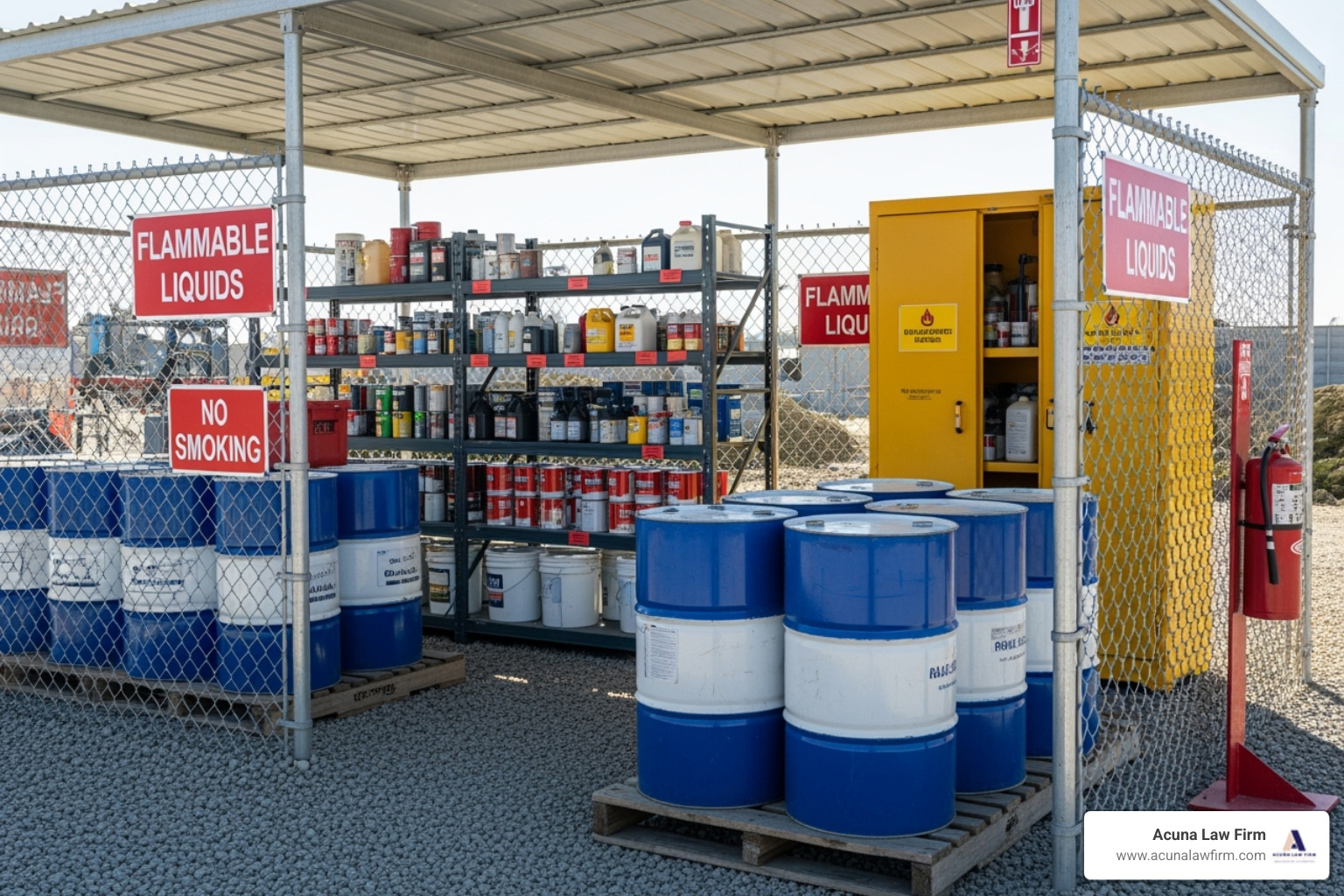
Construction sites contain numerous fire hazards, including flammable materials, open flames, and complex electrical systems. Burns can be chemical (from corrosive substances like wet cement), thermal (from hot surfaces or flames), or electrical (from contact with live circuits).
Fires and explosions often result from preventable mistakes like improper storage of flammable materials, faulty wiring, or unsafe hot work (welding, cutting). Prevention includes:
- Proper storage of chemicals in well-ventilated areas.
- Readily available fire extinguishers and trained users.
- Clear emergency response plans and evacuation routes.
- Regular electrical inspections and a hot work permit system.
Machinery and Vehicular Accidents
Heavy machinery like forklifts, cranes, and bulldozers are essential but dangerous. Transportation incidents were the second highest cause of death for construction laborers between 2016 and 2020. Risks include equipment rollovers, collisions, and workers being caught in moving parts. Key causes are lack of training, equipment malfunction, and large blind spots.
Prevention requires multiple layers of safety:
- Traffic control plans to separate workers and vehicles.
- Regular maintenance to keep machinery safe.
- Only certified operators should be allowed to use equipment.
- Safety features like backup alarms, cameras, and spotters are crucial.
Exposure to Harmful Substances
Many dangers on construction sites are invisible. Workers are exposed to harmful substances that can cause immediate or long-term health problems. These include:
- Asbestos: Found in older buildings, can cause lung cancer and mesothelioma.
- Lead: From old paint, causes neurological damage.
- Silica dust: Generated from cutting concrete or brick, causes silicosis and lung cancer.
- Solvents: Can cause respiratory and nervous system damage.
- Carbon monoxide: An invisible poison from gas-powered equipment.
Protection is essential. Personal Protective Equipment (PPE) is absolutely essential:
- Respiratory protection with properly fitted respirators for dusts, fumes, and gases
- Chemical-resistant gloves for handling hazardous materials
- Protective clothing like coveralls to prevent skin contact
- Eye protection including goggles or face shields for splashes and airborne particles
Other measures include proper ventilation, air quality monitoring, and making Safety Data Sheets (SDS) available for all chemicals. Using less hazardous materials whenever possible is also a key strategy.
Building a Safer Site: Prevention and Worker Rights
Preventing a construction injury is about creating a workplace culture where safety is the top priority for everyone. This requires collaboration between employers and employees, guided by OSHA regulations and a shared commitment to ensuring every worker gets home safely.
For those who have already been injured, understanding your legal options is the first step toward recovery. You can find more info about Personal Injury law on our website.
The Importance of Safety Plans and Training
A comprehensive safety plan is a site’s playbook for preventing accidents. It’s a living document that should include hazard identification, risk control measures, and clear emergency procedures. The plan must also define safety responsibilities for all personnel to ensure accountability.
Regular job site inspections are critical to spot new hazards, confirm procedures are being followed, and verify equipment is safe. However, a plan is only effective with proper training. Effective training teaches workers to:
- Recognize hazards in real-time.
- Use safe work practices for all tasks.
- Properly use and maintain personal protective equipment (PPE).
- Know emergency procedures by heart.
Critically, training must be provided in a language and vocabulary that workers understand. Language barriers contribute to higher fatality rates among Hispanic construction workers, making bilingual safety instruction essential. La seguridad no funciona si los trabajadores no entienden las reglas.
Failing to meet OSHA standards can result in fines up to $16,131 per violation, but the true cost is measured in lost lives and devastated families. Investing in safety is not just a legal requirement; it’s a moral one.

Understanding Your Rights After a Construction Injury
Every construction worker has enforceable rights established by OSHA to ensure their safety. Knowing these rights is empowering.
- You have the right to a safe workplace. Your employer must provide a work environment free from known hazards that could cause serious harm or death.
- You have the right to safety training in a language you understand about the specific hazards of your job.
- You have the right to report an injury without retaliation. It is illegal for an employer to punish or fire you for reporting a work-related injury.
- You have the right to request an OSHA inspection if you believe serious hazards exist on your job site.
- You have the right to refuse dangerous work under specific conditions where you face an imminent danger of death or serious injury.
Resources like those from NIOSH resources for workers can provide additional support. If you’ve been injured, you don’t have to steer this alone. Estamos aquí para ayudarle.
What to Do After a Construction Accident
Even on the safest sites, accidents can happen. A construction injury is a traumatic event, and the steps you take immediately after are crucial for your health, recovery, and legal rights. Your actions can significantly impact your ability to receive proper medical care and financial compensation.
For more detailed information, visit our page on More info about Construction Accidents.
Step 1: Seek Immediate Medical Attention
Your health is the top priority. Seek medical care immediately, even if your injuries seem minor. Adrenaline can mask pain, and some serious conditions like concussions or internal injuries are not always obvious.
- Get medical care at an ER, urgent care, or from your doctor.
- Report all symptoms and explain how the accident occurred.
- Create a medical record that documents your injuries and treatment.
- Follow your doctor’s orders strictly to aid your recovery and support any legal claim.
Step 2: Report the Injury to Your Employer
After getting medical attention, you must report the injury to your employer. This is a critical step for any workers’ compensation or legal claim.
- Notify your supervisor or HR department according to company policy.
- Provide written notification of the accident, including the date, time, and location.
- Fill out an incident report and request a copy for your records.
- Get witness information, including names and contact details.
Step 3: Understand Your Legal Options for a Construction Injury
After a construction injury, you generally have two paths for compensation: Workers’ Compensation and a Third-Party Liability Claim.
- Workers’ Compensation: This is a no-fault insurance system providing benefits to injured workers, regardless of who was at fault. It typically covers medical bills and a portion of lost wages. However, it generally does not cover damages for “pain and suffering.”
- Third-Party Liability Claims: If your injury was caused by the negligence of someone other than your direct employer (like another contractor, a property owner, or a defective equipment manufacturer), you may file a third-party lawsuit. These claims can seek a broader range of damages, including:
- Full compensation for medical bills and lost earning capacity.
- Damages for pain and suffering, emotional distress, and reduced quality of life.
- Punitive damages in cases of extreme negligence.
Here’s a quick comparison:
| Feature | Workers’ Compensation | Third-Party Claims |
|---|---|---|
| Fault Required | No (no-fault system) | Yes (must prove negligence of a third party) |
| Employer | Your direct employer | Anyone other than your direct employer |
| Covered Damages | Medical expenses, lost wages, disability benefits | Medical expenses, lost wages, pain & suffering, etc. |
| Pain & Suffering | Generally NOT covered | Often IS covered |
How an Experienced Attorney Can Help
After a construction injury, you face physical pain, medical bills, and uncertainty about your future. Navigating the complex legal and insurance systems alone is an overwhelming burden. At Acuna Law Firm, we take that burden off your shoulders so you can focus on healing.
Understanding the legal landscape is complex. Workers’ compensation laws and the potential for a third-party claim require a deep understanding of liability and negligence. For example, while some states have specific laws like New York’s Scaffold Law, Oklahoma has its own unique regulations that affect how claims are handled. We know these laws intimately and apply them to your case.
Insurance companies aim to minimize payouts. Their adjusters may downplay your injuries or pressure you into a low settlement. With an attorney, you have an advocate to handle all communications and negotiate aggressively for the fair compensation you deserve for your construction injury.
Building a strong case requires gathering critical evidence like accident reports, medical records, and witness statements. We also consult experts—including medical specialists and accident reconstructionists—to build a compelling case that demonstrates the full impact of your injury.
Maximizing your compensation means looking beyond current bills. We calculate future medical needs, long-term lost earning capacity, and the value of your pain and suffering. Many injured workers don’t realize the full value of their claim without an experienced attorney’s review.
Language should never be a barrier to justice. We are proud to offer fully bilingual services in English and Spanish. Ofrecemos asistencia legal experta en inglés y español para todos nuestros clientes.
We believe everyone deserves to know their options, which is why we offer a free, no-obligation consultation. We work on a contingency basis, meaning you pay nothing unless we recover compensation for you. You’ve been through enough; let us handle the legal fight.
Schedule a free consultation with our team today. We’re ready to listen and start fighting for the compensation you deserve. You can also learn more about our practice areas to see how we help injured individuals.