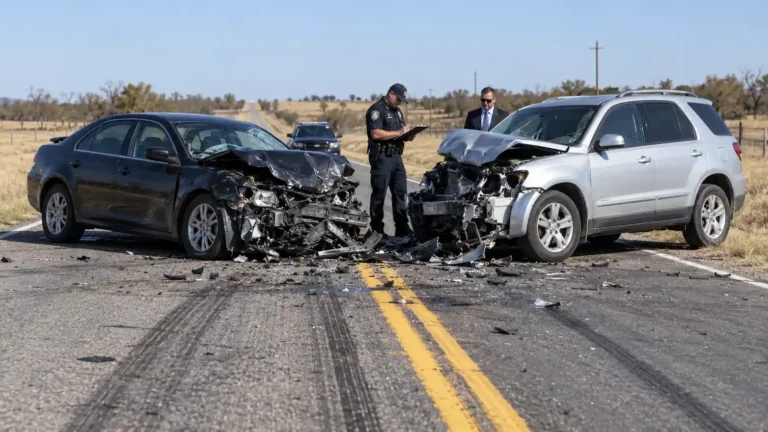


An insurance claim denial, a lowball offer, or a delay that stretches into weeks with no explanation: each of those situations feels like a closed door. An insurance claims attorney sees them differently. What the insurer characterizes as a resolved issue or a policy limitation is frequently a negotiating position, not a legal determination, and the difference between accepting that position and challenging it with documented evidence is often the difference between recovering what the injury cost and recovering a fraction of it.
In Oklahoma, personal injury claimants have legal rights that exist independently of what the insurer chooses to communicate, offer, or acknowledge. An insurance claims attorney who understands how those rights interact with the specific policy language, the applicable coverage, and the evidentiary record can challenge a denial, reconstruct the damages argument, and negotiate from a position the insurer did not anticipate when it made the initial decision.
At Acuña Law Firm, we represent injured Oklahomans whose insurance claims have been denied, undervalued, or delayed. Explore your legal options for protecting deadlines, evidence, and compensation by speaking with our team at a no-commitment consultation.
What Insurers Count On and What Changes That Calculation
The insurer’s advantage in any personal injury claim is informational. It knows the policy language precisely. It knows what documentation it needs to dispute the claim. It knows that most claimants will accept an early offer before the full scope of the damages is documented, and it knows that a claimant without legal representation is less likely to identify the coverage provisions the insurer did not mention voluntarily.
An insurance claims attorney levels that informational imbalance. The policy is read in full, not through the summary the adjuster provides. Coverage sources that the insurer has not raised, including underinsured motorist coverage, umbrella provisions, or medical payments coverage available under the claimant’s own policy, are identified and evaluated. The damages argument is built from the complete medical record rather than from what the insurer has characterized as the relevant treatment, and the claim is structured to present what the policy actually supports rather than what the insurer has offered to pay.
Our Oklahoma City personal injury lawyer page explains how we approach insurance claim disputes and what a complete case evaluation involves from the first conversation with our team.
Insurance Claims Insurance Coverage Issues That Shape What Is Available
Insurance claims insurance coverage issues are not always about whether a policy exists. They are frequently about whether the coverage that does exist is being correctly applied, whether all applicable policies have been identified, and whether the insurer is interpreting the policy language in the narrowest way it can justify without actually triggering a bad faith claim.
Policy limit disputes are one of the most common coverage issues. An insurer may present the at-fault party’s bodily injury liability limit as the ceiling of what is available without disclosing that additional coverage sources exist. When the responsible party’s liability coverage is insufficient to compensate the full scope of the damages, the claimant’s own uninsured or underinsured motorist coverage, available through their own policy, may provide additional recovery. That coverage is not offered proactively. An insurance claims attorney identifies it, demands it, and pursues it through the claimant’s own insurer if necessary.
Causation disputes are another category of coverage issue. An insurer that characterizes the claimed medical treatment as unrelated to the accident, or attributes the injury to a pre-existing condition rather than the covered event, is arguing a coverage position rather than a factual one. The medical record, when it is complete and correctly assembled, is what defeats that argument. A treating physician who has documented the connection between the accident and the diagnosis, the progression of the injury over time, and the prognosis for recovery, gives the coverage argument a clinical foundation the insurer cannot dismiss without producing its own medical expert to challenge it.
What Insurer Tactics Look Like in Practice
Insurance adjusters are trained professionals whose performance is measured partly by how much they reduce claim payouts. Their tactics in a personal injury claim follow recognizable patterns, and an insurance claims attorney who has worked through those patterns on behalf of injured clients can identify them early enough to prevent the damage they are designed to cause.
The early recorded statement is one of the most consistently used tools. An adjuster who contacts the claimant within days of the accident, before the full extent of the injuries is known, before the claimant has legal representation, and before the medical record has been assembled, is not gathering neutral information. The statement is designed to lock in the claimant’s account of the accident and the injuries at a point where that account is most likely to minimize the damages. An inconsistency between that early statement and later medical documentation becomes a credibility argument the insurer uses throughout the claim.
Delays are another deliberate tactic. An insurer that does not respond to a demand letter, requests additional documentation that has already been provided, or schedules an independent medical examination without explaining the process is not experiencing administrative difficulty. It is creating a timeline that pressures the claimant toward accepting a settlement before the clinical picture is complete. An insurance claims attorney who understands the insurer’s timeline obligations under Oklahoma law can counter that pressure with formal demands that create a record of the delay.
Building the Insurance Claims Settlement Strategy
The insurance claims settlement strategy in a personal injury case is not a response to what the insurer offers. It is a structure built from the evidentiary record before the first demand letter is sent, designed so that every element of the damages argument is supported before the negotiation begins.
That structure starts with the liability evidence. The accident documentation, the police or incident report, the photographs, any available surveillance footage, and the witness accounts collected while the event is still specific in those witnesses’ memory form the foundation of the argument that the responsible party is liable. A liability position that is clearly established and thoroughly documented removes one of the insurer’s primary tools for reducing the payout: the comparative fault argument.
The medical record is the second component of the insurance claims settlement strategy. Every treating provider, every specialist, every diagnostic study, and every functional assessment from the accident date through the point of maximum medical improvement contributes to the damages picture. Gaps in that record are the insurer’s opportunity. A complete, internally consistent medical record that traces the injury from the accident through its clinical consequences and prognosis eliminates most of the common coverage disputes before they arise.
The economic damages calculation is the third component. Medical bills with the corresponding insurance explanation of benefits documents, employer records of missed work, and pay stubs that establish the pre-injury income baseline are the core. When the injury produces a lasting functional limitation, the forensic economic projection of future lost earning capacity becomes the largest single component of the economic damages, and it requires expert support to be credible in a settlement demand or at trial.
The Insurance Claims Filing Deadline and Why It Governs Everything
The insurance claims filing deadline in Oklahoma personal injury cases is two years from the date of injury under Title 12, Section 95 of the Oklahoma Statutes. That deadline applies to the right to file a lawsuit, which is what creates the legal leverage that makes meaningful settlement negotiations possible. An insurer that knows the deadline has passed has no incentive to negotiate, because the claimant cannot file the lawsuit that makes litigation a credible threat.
The practical urgency of acting before the insurance claims filing deadline has less to do with the two-year cutoff and more to do with what happens to the evidence before it arrives. Surveillance footage from accident locations overwrites in cycles of days to weeks. Electronic vehicle data purges after routine ignition cycles. Witnesses’ accounts become less specific with time. Physical conditions that contributed to an accident get repaired. The investigation that produces the strongest settlement demand starts at the accident scene, and the value of every piece of evidence it captures decreases incrementally with each week of delay.
When the responsible party is a government entity, the insurance claims filing deadline compresses significantly. Oklahoma’s Governmental Tort Claims Act requires a written notice of claim to be filed with the appropriate government body within one year of the injury. That one-year requirement is independent of and earlier than the general two-year limitations period, and missing it bars the claim entirely regardless of how strong the liability evidence is.
When a Denial Is Not the End of the Claim
An insurance claim denial is a letter, not a legal judgment. It reflects the insurer’s assessment of the claim at the time the denial was made, based on the documentation available to the adjuster at that point. When the documentation changes, when additional medical evidence is presented, when expert analysis of the accident mechanism addresses a disputed causation argument, or when the full policy language is reviewed and applied correctly, the denial can be challenged, overturned, or bypassed through litigation.
An insurance claims attorney who reviews a denial evaluates three things: whether the denial was legally correct under the policy language, whether the factual basis the insurer used to support the denial is accurate and complete, and whether the denial process itself was conducted in a manner consistent with Oklahoma’s insurance regulations. An insurer that mischaracterized the policy, relied on incomplete factual information, or failed to conduct a reasonable investigation before denying the claim may have exposure beyond the original claim value, including potential bad faith liability that changes the entire economics of the dispute.
Responding to a denial effectively requires more than disagreeing with the insurer’s conclusion. It requires a specific, documented counter-argument that addresses each basis for the denial with evidence. An insurance claims attorney who builds that counter-argument from the complete medical record, the liability evidence, and the correct policy interpretation is presenting the insurer with a choice: reconsider the denial with the complete file or defend the decision in litigation.
What a Complete Case Evaluation Reveals
Most people who contact an insurance claims attorney after a denial or a low offer do not know whether the insurer’s position is legally supportable or not. They know they are dissatisfied. They suspect the insurer is not being straightforward. They do not know what the policy actually says, what coverage sources they may not have pursued, or whether the deadline situation allows time to challenge the denial effectively.
A complete case evaluation addresses all of those questions. The policy is reviewed in full. The denial letter is analyzed against the policy language and the factual record. The damages picture is assessed against what a complete evidentiary file would support in a demand or at trial. The deadline situation is evaluated to determine how much time is available and what steps are most urgent.
At Acuña Law firm you can explore the legal options for your insurance claim and protect the deadlines, evidence, and compensation the claim supports. Contact us for a direct and confidential case evaluation before the insurer’s timeline or the legal deadline shapes a decision that cannot be undone.
FAQ
What does an insurance claims attorney do that a claimant cannot do alone?
An insurance claims attorney reads the complete policy, identifies all applicable coverage sources, builds the evidentiary file from the complete medical and accident record, structures the damages argument before the first demand is made, and challenges the insurer’s position with specific, documented evidence rather than general disagreement.
What are the most common insurance claims insurance coverage issues?
The most common are policy limit disputes where additional coverage sources exist but were not disclosed, causation arguments where the insurer characterizes the treatment as unrelated to the accident or attributable to a pre-existing condition, and comparative fault attributions that reduce the payout by assigning partial responsibility to the claimant.
What is the insurance claims filing deadline in Oklahoma?
Oklahoma’s statute of limitations for personal injury claims is two years from the date of injury under Title 12, Section 95 of the Oklahoma Statutes. When the responsible party is a government entity, the Oklahoma Governmental Tort Claims Act requires a written notice of claim within one year of the injury before any lawsuit can be filed.
Can a denied insurance claim be successfully challenged?
Yes. A denial reflects the insurer’s assessment of the claim at the time it was made, based on the documentation available then. When additional medical evidence is presented, when expert analysis addresses a disputed causation or mechanism argument, or when the policy language is correctly applied to the facts, the basis for the denial changes.
What does an insurance claims settlement strategy involve?
An effective settlement strategy is built before the first demand is sent. It requires a complete liability record that addresses comparative fault arguments, a medical record that traces the injury from the accident through its clinical consequences and prognosis, an economic damages calculation with supporting financial documentation, and a future damages projection when the injury produces lasting limitations.