

Here is what most people find out too late: a bodily injury settlement offer is not the insurer’s best number. It is their opening move. The adjuster works from whatever is in the file on the day the offer goes out, and in the early weeks of a claim, that file is thin. Federal crash injury statistics show that injuries in vehicle collisions affect millions of people annually, yet the difference between early unrepresented settlements and final values in attorney-handled cases is striking and well documented.
The gap exists because valuing a bodily injury settlement correctly requires three things the insurer is not motivated to build: a complete medical record that reflects the full scope of the injury, documented economic harm across the entire recovery period, and a liability case strong enough to make walking away from negotiation a real option. None of those exist at week two.
Acuña Law Firm has seen the same dynamic repeat across Oklahoma cases for years. Families settle early, often in good faith, and find out months later that the injury cost far more than the number they accepted.
What Actually Goes Into an Insurer’s First Offer
Adjusters are not trying to calculate what the case is worth. They are trying to calculate what it will take to close it. That distinction matters for anyone evaluating a bodily injury settlement offer.
The first offer reflects the medical records submitted to date, usually just the emergency visit and the first follow-up. It reflects visible property damage. It may reflect a quick recorded statement taken from the injured person before they had counsel. What it does not reflect is any future cost, any permanent limitation, any lost earning potential beyond the first missed paychecks, or any non-economic harm that has not been formally documented.
Accepting that number before those elements are built means giving up the right to claim them. Oklahoma personal injury releases are final. There is no coming back after the signature.
Why the Medical Record Has to Be Built, Not Just Collected
Doctors treat patients. They do not build legal records. The clinical documentation that emerges from a standard course of treatment is accurate but rarely complete enough to support a full bodily injury settlement claim without specific follow-up.
The physician needs to put on paper what the injury means for the future: whether the impairment is permanent, what treatment will be required over the next several years, and how function is limited in the activities and demands of that specific person’s work and life. Without that written opinion, future damages are unquantified, and unquantified damages do not appear in settlement offers.
Settling before maximum medical improvement is the single most expensive mistake in a bodily injury case. The final injury picture does not exist yet. Accepting a number before it does is accepting less than what the documented harm will eventually show.
Bodily Injury Settlement Claim Evidence: Gone Faster Than People Expect
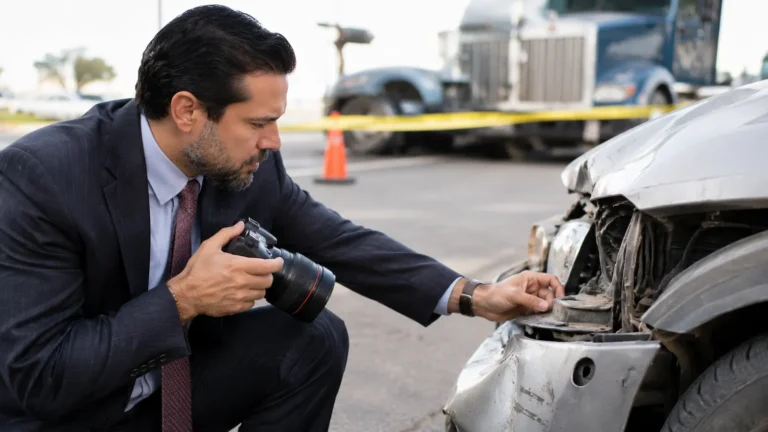
The vehicle that caused the injury holds data the insurer’s engineers can access right now. The event data recorder captured the last several seconds before impact: speed, braking force, steering angle, throttle position. If the injured person does not have counsel who sends a preservation demand to the right parties within days, that vehicle gets repaired, that data gets overwritten, and that evidence is gone.
The personal injury legal team at Acuña Law Firm sends those demands immediately, because we have watched evidence disappear between the first call and the first appointment. Camera footage from businesses near the scene, traffic system recordings, dashcam video from other vehicles: all of it runs on overwrite cycles that reset within days or weeks.
Witnesses are reachable right after an incident and unreachable six months later. Physical conditions at the scene change with the weather. When a product defect is part of the story, the product needs to be preserved before anyone in the chain inspects, repairs, or disposes of it.
Bodily Injury Settlement Insurance Coverage Issues
Most injured people assume there is one policy and one number on the table. In practice, serious bodily injury cases involve multiple potential coverage sources, and missing even one can mean leaving the most significant recovery option untouched.
The at-fault party’s liability policy is the floor, not the ceiling. When those limits run out, the injured person’s own underinsured motorist coverage steps in, but only if the claim is filed correctly and within the terms of that policy. Medical payments coverage, employer umbrella policies in company vehicle cases, and excess coverage layers all add to the pool of available recovery.
Injury economic data from the CDC consistently shows that serious injuries cost far more than minimum policy limits cover. A bodily injury settlement negotiated against a single policy, without mapping the full coverage picture first, almost never reaches the actual value of the harm.
Bodily Injury Settlement Future Damages: The Number the First Offer Ignores
Future damages are where most bodily injury settlement negotiations quietly fall apart for unrepresented claimants. The insurer’s offer does not include them because there is no legal obligation to offer what has not been formally claimed and documented.
Future medical costs need a treating physician’s itemized projection: specific anticipated procedures, therapy frequency, pain management needs, and adaptive equipment or home modifications for permanent conditions. Each item needs a dollar figure from a qualified medical source, not an estimate from a claims department spreadsheet.
Future lost earning capacity needs a forensic economist who starts from the physician’s functional assessment and builds outward: what this person earned, what they can now earn given their restrictions, and what that gap costs across their remaining working years. For anyone in a skilled trade, a physical occupation, or a specialized career, that number can exceed every other component of the damages combined.
When the At-Fault Party Disputes the Injury Entirely
Some bodily injury settlement negotiations stall not over the damages number but over whether the injury happened the way the claimant says it did. Insurers contest causation more often than most people expect, particularly in soft tissue cases, delayed-onset injuries, and incidents where the property damage looks minor relative to the reported harm.
The argument usually follows a recognizable pattern. Low vehicle damage gets cited as evidence that the force of impact was insufficient to cause the claimed injury. A gap between the incident and the first medical visit gets framed as proof the injury was pre-existing or unrelated. Prior medical history gets used to suggest the condition existed before the accident.
Each of those arguments has a counter, and each counter requires specific documentation. Impact force and injury severity do not correlate simply, and biomechanical expert analysis can establish that. Delayed care has documented medical explanations, particularly for adrenaline-masked injuries. Pre-existing conditions aggravated by an accident are compensable in Oklahoma under the eggshell plaintiff doctrine. But none of those defenses exist without evidence built early and deliberately.
The Role of Comparative Fault in a Bodily Injury Settlement
Oklahoma follows a modified comparative fault rule that reduces a claimant’s recovery in proportion to their own share of responsibility for the incident. Under Title 23, Section 13, an injured person who is found 49 percent at fault can still recover 51 percent of the damages. At 51 percent or more, recovery is barred entirely.
Insurers use this rule strategically. Assigning partial fault to the injured person reduces the settlement number by that percentage, so a ten-point fault attribution on a substantial claim translates directly into a meaningful reduction in what the insurer pays out. Early recorded statements, inconsistent accounts, and missing evidence all create room for fault to be attributed in ways the injured person may not anticipate.
A well-built bodily injury settlement demand addresses the fault question directly, with evidence that supports the claimant’s account of events and closes the gaps the insurer would otherwise use to shift responsibility. Leaving that issue unaddressed is effectively conceding the discount.
Settlement Timing and What Oklahoma Law Actually Says
Two years from the date of injury. That is the personal injury statute of limitations in Oklahoma under Title 12, Section 95, and it is the last moment a lawsuit can be filed, not a recommended waiting period.
The practical deadline is much earlier. Evidence degrades in days. Witnesses become unavailable over months. The medical record that supports future damages takes the full course of treatment to build. And once a release is signed, the case is over, regardless of what comes to light afterward.
An insurer that gets a release in week three has closed a case that might have been worth four times the settlement amount. Oklahoma does not reopen releases because the injured person later learned what the claim was worth. The only protection is involvement before that conversation happens. Bring the details of your situation to the team at Acuña Law Firm and get a real read on what your bodily injury settlement is worth before anything gets signed.
FAQ
How is a bodily injury settlement value calculated?
Economic and non-economic damages are both part of the number. Economic damages cover all medical costs through the full projected treatment arc, wage loss across the recovery period, and future lost earning capacity when the injury affects long-term work ability. Non-economic damages cover pain, suffering, permanent impairment, and lost enjoyment of life. A forensic economist and treating physicians provide the expert foundation for the economic side of the projection.
Why do early bodily injury settlements tend to be undervalued?
Because they are accepted before the injury is fully documented. The treating physician has not yet established permanent impairment or future medical needs. The economic projection does not exist. The full coverage picture has not been mapped. Each of those gaps works in the insurer’s favor. The second most common problem is failing to identify underinsured motorist coverage, which is often the largest available source of recovery in serious injury cases.
What evidence matters most in a bodily injury settlement claim?
The medical record drives the damages calculation. Event data recorder information, camera footage, and witness statements drive the liability case. Physical scene evidence, product preservation in defect cases, and employer records in work-related incidents each add layers. Everything starts to degrade within days of the incident, and what is not preserved early is usually unavailable when it matters most.
What is the filing deadline for a bodily injury settlement claim in Oklahoma?
Two years from the date of injury under Title 12, Section 95. If a government entity was involved in any capacity, the Oklahoma Governmental Tort Claims Act requires written notice within one year, and missing that notice bars the claim against that entity permanently. A signed settlement release closes the claim before either deadline runs. There is no recourse after the release is accepted.