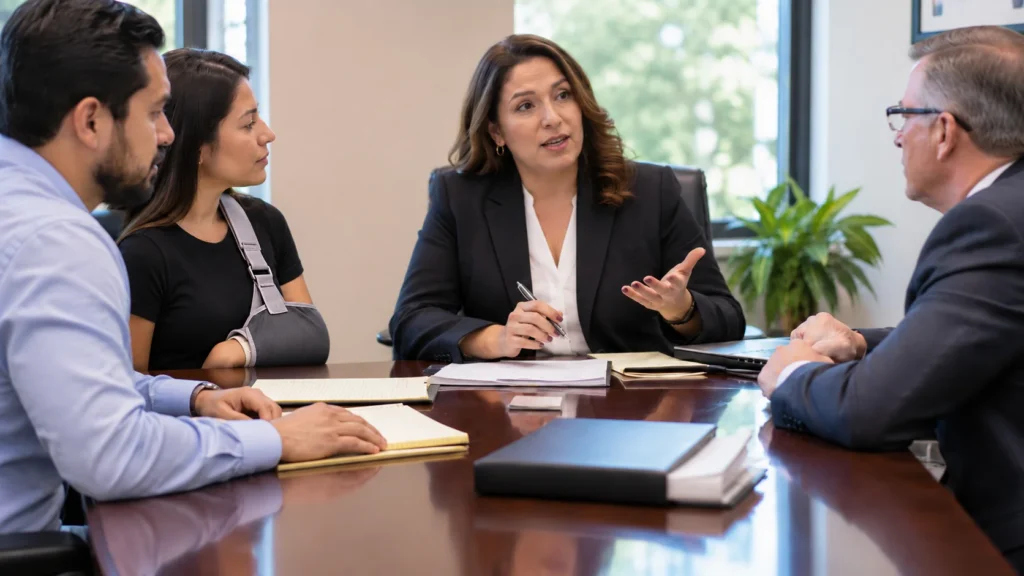
Personal injury mediation is the stage where most Oklahoma injury cases actually settle, and it is also the stage where the most money gets left on the table. Mediation is a voluntary, confidential negotiation facilitated by a neutral third party, but that description does not capture what happens when one side walks in prepared and the other does not.
The insurer at the table has a number in mind before the session begins. That number was set by an adjuster who reviewed the medical records, ran the claim through a software model, and estimated the minimum acceptable to close the file. The injured person who accepts that number without independent legal review rarely learns what they left behind.
Acuña Law Firm prepares clients for personal injury mediation by building the full damages picture before the session opens, so the opening offer has a documented counter to meet it.
What Personal Injury Mediation Actually Looks Like
Mediation in a personal injury case is not a courtroom. There is no judge, no jury, no rules of evidence, and no binding outcome unless both sides agree in writing. The mediator does not decide anything. They move between rooms, carry offers and counteroffers, and look for the number both sides can live with.
What makes personal injury mediation different from a simple negotiation is the structure. Each side presents a written mediation statement before the session. That statement frames the liability argument, summarizes the medical evidence, and anchors the damages demand with supporting documentation.
A weak mediation statement produces a weak opening offer. A statement built on documented medical treatment, expert opinions, vocational evidence, and a fully calculated future damages projection puts a very different number on the table from the start.
The mediator has no authority to compel a settlement. Either side can walk away. When the injured person understands that dynamic, they enter the session with more leverage than the insurer wants them to realize.
Personal Injury Mediation Preparation: What Has to Be Ready
The single most common mistake in personal injury mediation preparation is arriving before the medical treatment is complete. When the full scope of the injury is still unfolding, any number accepted at mediation undervalues the claim. Maximum medical improvement is the benchmark. The settlement discussion should start there, not before.
Personal injury mediation lost wage proof is one of the most frequently underdocumented elements in a mediation package. Wage records, tax returns, employer statements, and a vocational expert’s analysis of reduced earning capacity must be organized and verifiable before the session. An insurer will not credit lost wage claims supported only by the injured person’s own account.
The medical records need to tell a continuous story from the date of the accident to the present. Any gap in treatment becomes a gap in the damages argument. If there were periods where the injured person could not access care due to cost or transportation, that explanation needs to be documented before the insurer uses the gap against the claim.
Personal injury mediation preparation also includes anticipating the defense arguments. If comparative fault is likely to be raised, the response to that argument needs to be built before the mediator delivers the opening offer.
Documentation the Other Side Will Challenge
The injury claim legal team at Acuña Law Firm reviews the full medical and economic record before any personal injury mediation session, because the defense will challenge every figure that lacks a documented source.
Future medical costs are the most contested element. A life care planner who has evaluated the injured person and produced a report setting out future treatment needs, costs, and durations gives that number a source the defense must rebut with their own expert rather than simply dismissing.
Non-economic damages, including pain, suffering, and loss of enjoyment of life, require their own documentation. Daily journals, statements from family members and coworkers, photographs showing what the injured person can no longer do, and mental health records all support a non-economic damages claim that the insurer cannot reduce to a software output.
The personal injury mediation expert review of the damages package before the session is not optional. It is the difference between a number the defense team takes seriously and one they open with a low counteroffer.
Personal Injury Mediation and Insurance Coverage Issues
Insurance coverage issues surface at mediation more often than injured people expect. The insurer may present a policy limit as a ceiling on recovery, claim that certain damages fall outside coverage, or argue that a co-defendant’s insurer should bear a greater share of the settlement.
National mediation standards outline how coverage disputes are handled in structured mediation settings, including how mediators manage sessions where coverage is contested by multiple parties.
Understanding the full coverage picture before mediation is part of the preparation. That includes the at-fault party’s liability policy, any underinsured motorist coverage available through the injured person’s own policy, umbrella coverage held by a corporate defendant, and workers’ compensation subrogation rights when the injury occurred on the job.
Personal injury mediation insurance coverage issues become particularly complex when multiple defendants carry separate policies. Identifying every available source and calculating the aggregate coverage before the session ensures the injured person is not negotiating against a fraction of what is actually available.
Oklahoma Legal Context for Personal Injury Mediation
Oklahoma’s personal injury statute of limitations under Title 12, Section 95 gives injured people two years from the date of the accident to file suit. Personal injury mediation typically occurs after a lawsuit is filed, though pre-litigation mediation also happens. Either way, the two-year deadline applies to the right to sue, and no mediation offer eliminates that right until the person signs a binding release.
Oklahoma’s modified comparative negligence rule under Title 23, Section 13 affects mediation directly. When the defense argues that the injured person bears partial fault for the accident, they use that argument to push the settlement number down. A prepared legal team addresses comparative fault as part of the mediation statement rather than waiting to respond when the mediator delivers the insurer’s position.
The personal injury mediation process in Oklahoma also involves evaluating whether the offered resolution accounts for future medical needs, lost earning capacity, and non-economic harm. A settlement that closes the file for the insurer but leaves the injured person without resources for ongoing treatment is not a resolution that serves the client.
Review your situation confidentially with the bilingual legal team at Acuña Law Firm before accepting any personal injury mediation offer.
FAQ
What is personal injury mediation in Oklahoma?
Personal injury mediation is a structured, confidential negotiation between the injured person and the defendant’s insurer, facilitated by a neutral mediator. The mediator does not decide the outcome. Both sides present their positions, the mediator carries offers between rooms, and a settlement is reached only if both sides agree in writing.
What does personal injury mediation preparation require?
It requires that medical treatment be complete or at a stable plateau before the session. Lost wage documentation must be organized and verifiable. The damages package needs expert support for future medical costs and non-economic harm. And the defense arguments on comparative fault and causation need to be anticipated and addressed in the mediation statement before the session opens.
How does personal injury mediation expert review affect the outcome?
A mediation package reviewed by a qualified legal team before the session identifies documentation gaps, ensures every damages figure has a cited source, and builds counter-arguments to the defense positions before the mediator delivers the first offer. That preparation changes the trajectory of the session from the opening exchange.
What are personal injury mediation insurance coverage issues to watch for?
The most common coverage issues include a policy limit presented as a hard ceiling when other coverage exists, coverage exclusions applied to disputed damages, and multi-party sessions where insurers dispute their proportional share. Identifying every available policy and calculating the aggregate coverage before the session is part of proper mediation preparation in Oklahoma.