
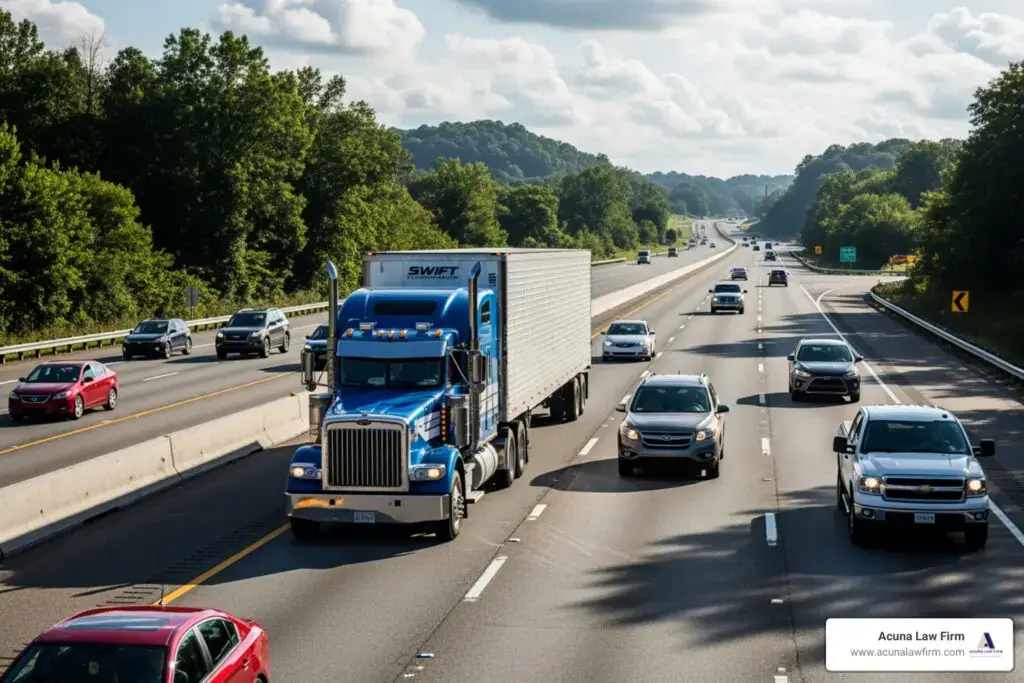
Understanding the Devastating Impact of Big Rig Crashes
An 18 wheeler accident involves a large commercial truck and is often devastating. These crashes are disproportionately deadly for occupants of smaller cars. In 2023, 4,354 people died in large truck crashes, and 65% of those fatalities were people in passenger vehicles.
The reasons are simple physics:
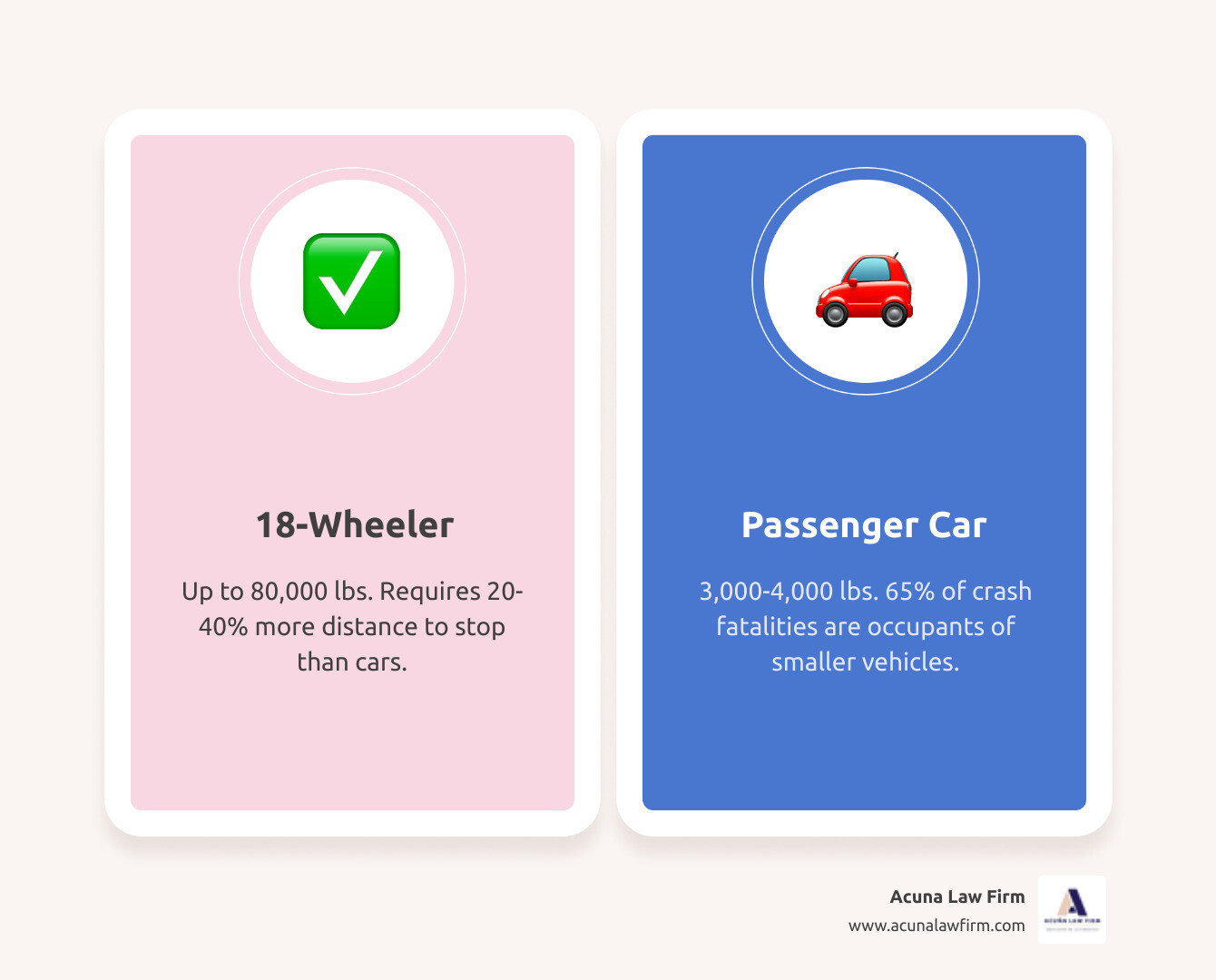
- Weight: A big rig can weigh 20-30 times more than a car.
- Stopping Distance: Loaded trucks need 20-40% more road to stop.
- Impact: The sheer size difference means families in smaller vehicles face catastrophic injuries or worse, while the truck driver may walk away.
Most fatal crashes happen on weekdays in rural areas, and the primary victims are almost always in the other vehicle. Understanding why these accidents happen, who is legally responsible, and what rights you have as a victim is critical. The road to recovery after a big rig collision can be overwhelming, but knowing the facts and your legal options is the first step toward justice.
The Sobering Reality: 18-Wheeler Accident Statistics
The statistics surrounding 18 wheeler accident incidents paint a sobering picture. In 2023, 4,354 people lost their lives in crashes involving large trucks. The most alarming fact is who is most affected: 65% of those who died were in passenger vehicles, not the trucks. Only 16% were truck occupants, with the rest being pedestrians, bicyclists, or motorcyclists.
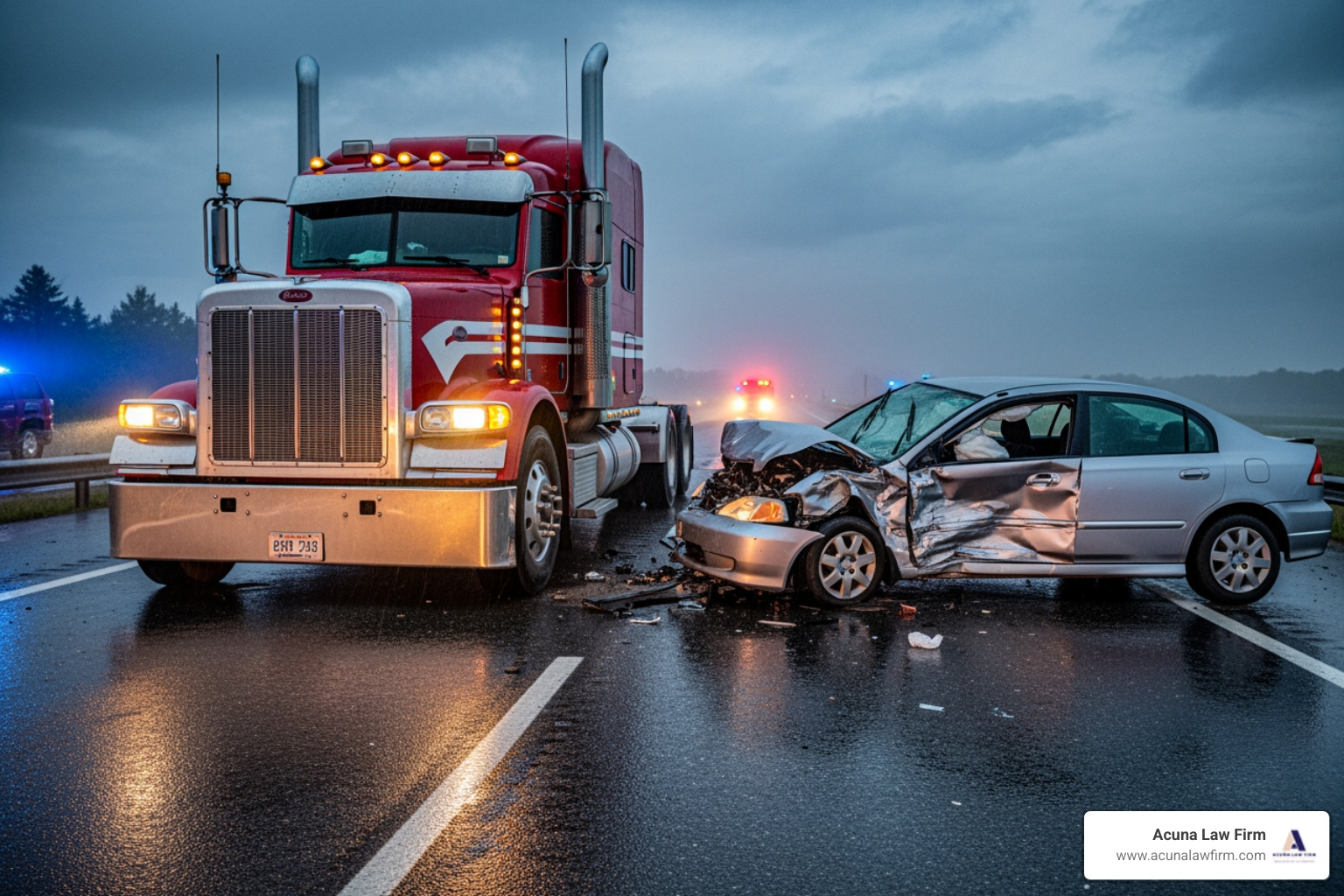
This overwhelming disparity is a matter of physics. A loaded 18-wheeler can weigh 80,000 pounds, compared to a car’s 3,000-4,000 pounds. In a collision, the smaller vehicle absorbs most of the force. In two-vehicle crashes involving a passenger car and a large truck, a staggering 97% of the fatalities are the occupants of the car. Injury statistics tell a similar story, with 71% of those injured being in passenger vehicles.
Recent data from the National Highway Traffic Safety Administration (NHTSA) shows fluctuating but consistently high numbers. After a 17% increase in fatalities from 2020 to 2021, and another 2% rise in 2022, there was a welcome 8% decrease in 2023. However, this still represents over 5,000 lives lost annually in recent years. For a deeper analysis, the Fatality Facts 2022: Large trucks report provides more detail.
Key patterns emerge from the data:
- When: 76% of fatal truck crashes occur on weekdays, mostly during daylight hours.
- Where: 54% happen in rural areas, often on major non-interstate roads.
- Frequency: Large trucks are involved in 10% of all fatal crashes, despite being only 5% of registered vehicles and accounting for 10% of total miles traveled. More details can be found in the NHTSA’s Traffic Safety Fact – 2022 Data – Large Trucks.
At Acuna Law Firm, we see the human side of these statistics. We’ve helped families throughout Oklahoma steer the aftermath of these devastating collisions. The data confirms what our experience shows: these accidents change lives forever.
Why Big Rig Collisions Happen: Common Causes and Types
An 18 wheeler accident is rarely simple. It’s often a result of multiple factors—a tired driver, a company cutting corners on maintenance, or bad weather. Determining who is legally responsible requires a deep investigation into all contributing causes. Fault can be shared among the driver, the trucking company, and even third parties.
Critical Challenges for Truck Drivers
Driving an 80,000-pound vehicle presents unique challenges that contribute to accidents:
- Driver Fatigue: Federal Hours-of-Service (HOS) regulations limit driving time, but pressure to meet deadlines can lead drivers to falsify logs and drive while exhausted, slowing reaction times.
- Braking Distance: A loaded truck needs 20-40% more distance to stop than a car, a gap that widens on wet or icy roads.
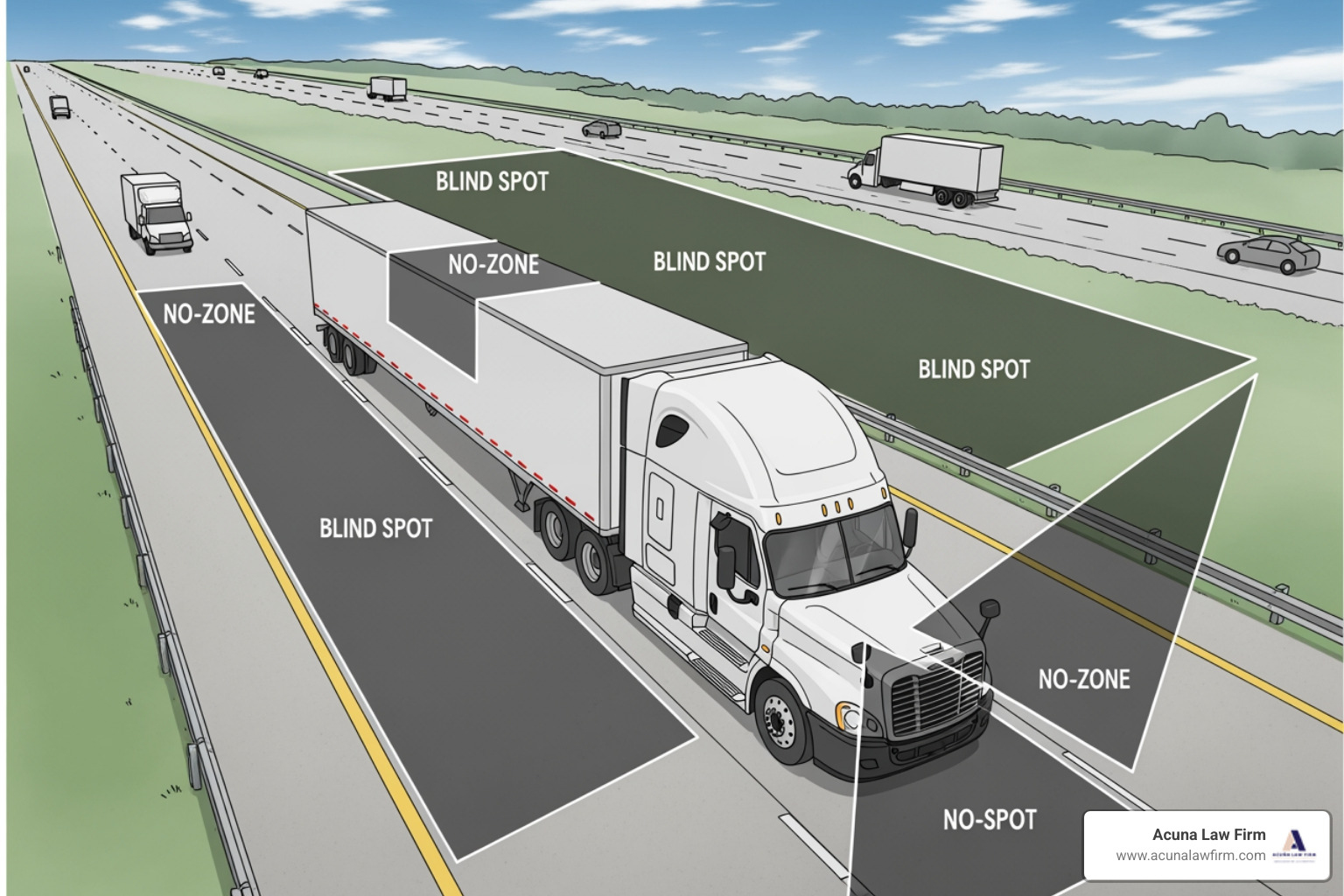
- Blind Spots (“No-Zones”): Trucks have massive blind spots in the front, back, and along both sides. If you’re in a no-zone, the driver cannot see you.
- Wide Turns: Trucks often need to swing wide into an adjacent lane to make a turn. Passenger cars that try to squeeze by can be crushed.
- Maneuverability: Big rigs cannot swerve or stop quickly to avoid hazards. For more information, our team has extensive experience investigating these complex truck and bus accidents.
Common Types of an 18 Wheeler Accident
The type of collision often reveals what went wrong:
- Jackknife Accidents: The trailer swings out, forming a sharp angle with the cab, often from hard braking or on slippery roads.
- Truck Rollovers: A high center of gravity makes trucks prone to tipping on curves, especially with shifting or improperly distributed cargo.
- Rear-End Collisions: A truck rear-ending a smaller vehicle is often catastrophic due to its weight and long stopping distance.
- Head-On Collisions: These are the deadliest crashes, occurring when a truck or car crosses the center line.
- T-Bone Accidents: These side-impact crashes usually happen at intersections when a truck runs a red light or misjudges a turn.
- Sideswipe Crashes: Often caused by unsafe lane changes or blind spots, a truck can push a car off the road or into other traffic.
- Underride Accidents: A smaller car slides underneath the truck’s trailer, often with fatal consequences due to the height difference.
External and Company-Related Factors
Often, the root cause of an 18 wheeler accident lies with the company, not just the driver:
- Improper Vehicle Maintenance: Companies cutting corners on repairs can lead to brake failure or tire blowouts.
- Overloaded or Unsecured Cargo: This creates instability, making the truck harder to steer and stop, and increasing rollover risk.
- Negligent Hiring and Training: Failing to check a driver’s record or providing inadequate training puts everyone at risk.
- Pressure from Trucking Companies: Unrealistic delivery schedules can force drivers to speed, drive fatigued, and violate safety regulations.
- External Conditions: While drivers must adjust for bad weather and poor road maintenance (potholes, faded markings), these factors make controlling a large truck significantly harder.
At Acuna Law Firm, we investigate every factor to identify all negligent parties, from the driver and trucking company to maintenance providers and cargo loaders, to ensure they are held accountable.
Navigating the Aftermath of an 18 Wheeler Accident
The moments after an 18 wheeler accident are chaotic. You’re shaken, possibly injured, and facing a complex legal and financial situation. Unlike a simple car crash, truck accidents involve federal regulations, multiple insurance policies, and several potentially liable parties.
At Acuna Law Firm, we guide families across Oklahoma through this process. Our team, including Spanish-speaking abogados, is here to handle the complexities so you can focus on healing.

Determining Fault and Liability
Figuring out who is at fault in a truck accident requires a thorough investigation. Liability can extend beyond the driver to multiple parties:
- The Truck Driver: Negligence can include distraction, speeding, drowsiness, or other traffic violations.
- The Trucking Company: They can be liable for negligent hiring, inadequate training, improper maintenance, or pressuring drivers to violate Federal Motor Carrier Safety Administration (FMCSA) regulations.
- Third Parties: Responsibility may also lie with cargo loaders who improperly secure freight, vehicle manufacturers for defective parts, or maintenance companies for shoddy repair work.
Our investigation digs into driver logs, black box data, maintenance records, and company policies to identify every party whose negligence contributed to your accident. For more on how we approach these claims, visit our page on Lesiones Personales.
Common Injuries and Potential Compensation
The force of an 80,000-pound truck often causes life-altering injuries, including:
- Traumatic Brain Injuries (TBI): From concussions to severe brain damage affecting cognitive function and personality.
- Spinal Cord Injuries: Potentially causing partial or complete paralysis.
- Broken Bones and Fractures: Often severe and requiring multiple surgeries.
- Internal Organ Damage: Life-threatening injuries from blunt force trauma.
- Burn Injuries: If a fire occurs during the crash.
- Wrongful Death: Tragically common in these accidents.
Compensation is meant to cover the full scope of your losses. We fight for:
- Economic Damages: All current and future medical expenses, lost wages, and diminished earning capacity.
- Non-Economic Damages: Compensation for physical pain, emotional distress, and loss of enjoyment of life.
- Property Damage: The cost to repair or replace your vehicle.
- Punitive Damages: In cases of extreme negligence, these are awarded to punish the defendant and deter future misconduct.
- Wrongful Death Damages: For families who have lost a loved one, this can include funeral expenses, lost financial support, and loss of companionship.
The Legal Process for Your 18 Wheeler Accident Claim
The legal journey can seem daunting, but we guide you through each step:
- Immediate Steps: Your health is the priority. Seek medical attention, call the police to create a report, and, if possible, take photos and exchange information at the scene.
- Hiring an Attorney & Investigation: Contacting an attorney quickly is crucial. Trucking companies start their defense immediately. We move fast to preserve evidence, obtaining the police report, medical records, and data from the truck’s “black box.” We subpoena company records on maintenance, hiring, and driver logs to build a strong case.
- Negotiation: We prepare a comprehensive demand package detailing the negligence and your damages. We then negotiate with the insurance company, fighting their tactics to devalue your claim. Most cases are settled at this stage.
- Litigation: If the insurance company refuses a fair offer, we are fully prepared to file a lawsuit and take your case to trial. We have recovered millions for our clients and are not afraid to go to court to secure justice.
The process takes time, but we are with you every step of the way. To learn more, explore our Áreas de Práctica.
Sharing the Road: Safety Tips for Passenger Vehicles
While we can’t control the actions of truck drivers, we can control our own. Practicing defensive driving around 18-wheelers is a critical way to protect yourself and your passengers. Understanding their limitations empowers you to make safer choices on Oklahoma’s highways and prevent a potential 18 wheeler accident.
How to Drive Safely Around Large Trucks
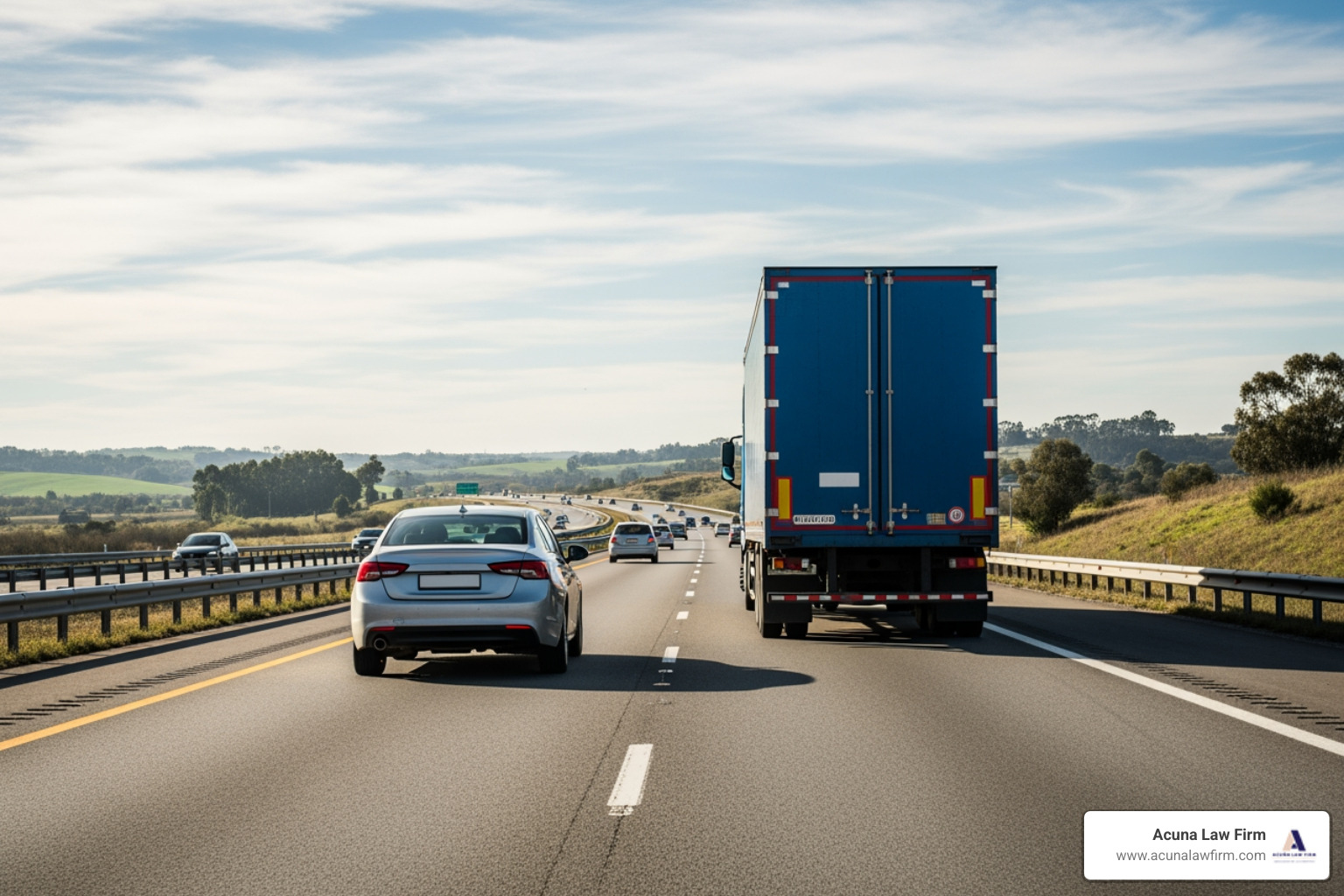
- Stay out of the “no-zones.”: If you can’t see the driver’s face in their side mirror, they can’t see you. Avoid lingering in their large blind spots in the front, back, and along both sides.
- Give them space: A loaded truck needs 20-40% more distance to stop. Maintain a following distance of at least 4-5 seconds to give yourself a safe cushion.
- Pass with purpose: Pass trucks on the left where visibility is better. Don’t linger. Merge back only when you can see the entire front of the truck in your rearview mirror. Never cut off a truck.
- Respect their wide turns: A truck may swing left to make a right turn. Never try to squeeze into the space on their right, as you could be crushed.
- Practice patience: Trucks are slow to accelerate and climb hills. Aggressive driving around them is dangerous. Stay calm and give them room to operate.
- Be considerate with high beams: Your high beams can blind a truck driver through their large mirrors. Keep your headlights on low beam when behind a truck at night.
- Allow extra lateral space: Avoid driving directly alongside a truck for extended periods. This gives you an escape route if the truck has a blowout or must suddenly change lanes.
Defensive driving means anticipating a truck’s limitations and giving it the space it needs. For more general safety information, our Accidentes de Autos page offers helpful resources.
Conclusion
An 18 wheeler accident is uniquely devastating. A truck can weigh 20 times more than your car and requires far more distance to stop, which is why 65% of fatalities are occupants of passenger vehicles. The causes are complex, ranging from driver fatigue and company negligence to improper maintenance and unsecured cargo.
If you or a loved one has been involved in a big rig collision in Oklahoma, the path forward can be overwhelming. You don’t have to face it alone.
At Acuna Law Firm, we stand up to large trucking companies and their insurers. Our experienced team, offering bilingual support (abogados que hablan español), knows how to investigate these complex cases and fight for the compensation you deserve. We’ve recovered millions for our clients and are dedicated to helping families find stability after a tragedy.
Your focus should be on healing. Let us handle the legal fight. We offer free consultations to help you understand your rights and options. If you’ve been injured, it’s crucial to explore your options for personal injury compensation. Contact us today.