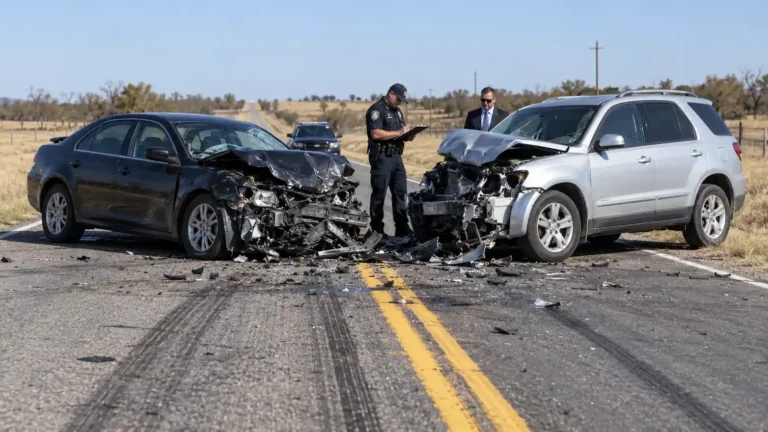

A rollover accident attorney starts with one question that the police report will almost certainly not answer: why did it roll? Rollovers are amongst the deadliest crashes on Oklahoma roads and are also amongst the most complex from a legal point of view as the cause is often not going to be a single factor and there are often multiple potential parties to blame.
A driver over correcting following a tire failure on the highway, a passenger vehicle with a roof that simply collapsed under the weight of the roll, a road shoulder with poor drainage that caused the initial loss of control; each of those scenarios points to a different set of responsible parties and a different argument.
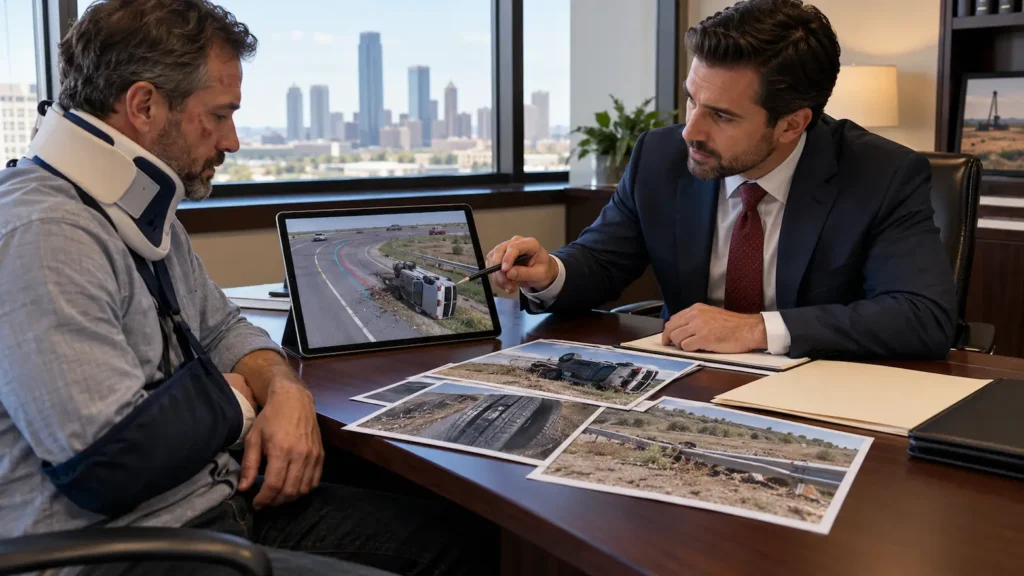
The rollover accident attorney’s inquiry starts with the question of cause and then proceeds to examine the evidence in relation to all the contributing factors prior to any liability being established. An injured person who sees a rollover accident attorney early is in a vastly better position than one who allows the insurance company’s version of events to become the starting point for their claim.
At Acuña Law Firm we represent people who have been seriously injured in rollover crashes all over Oklahoma. That includes rollover crashes where more than one party was at fault and the initial investigation only identified one.
Why Rollover Crashes Produce Complex Liability Questions
A rollover accident attorney will treat every crash as a multi-factor event until the investigation has worked through all the factors and they’re ruled out. The most frequent contributory causes fall into three broad categories and each of those will require a different evidential approach.
Driver caused rollovers occur when excessive speed on a curve, over correction after drifting onto the shoulder or an avoidance manoeuvre at highway speed causes the vehicle to roll past the point of recovery. If the avoidance manoeuvre was in response to the conduct of another driver (for example a sudden lane change or a vehicle running a stop sign) then that other driver’s liability is not wiped out simply because the end result was a rollover rather than a direct collision. A rollover accident attorney will follow the chain of causation back to the initial act.
Vehicle defect rollovers are stability failures which the manufacturer either knew or ought to have known about. SUVs and light trucks have a higher centre of gravity than a passenger car and a rollover accident attorney looking at a crash involving one of those vehicles will be looking at the vehicle’s stability control system, its electronic stability programme and whether there were any recalls or technical service bulletins for that vehicle model prior to the incident. If a vehicle defect was the cause of the rollover then the manufacturer’s product liability exposure is a separate claim from the driver’s negligence claim.
Road condition rollovers are those which occur as a result of inadequate shoulder maintenance, road surface failure or an improperly banked curve which would not have led to a loss of control on a properly maintained road. Where the road was being maintained by a government entity the claim against that entity would be governed by the Oklahoma Governmental Tort Claims Act and would be subject to the one year notice requirement.
The Physical Evidence a Rollover Accident Attorney Prioritizes
A rollover accident attorney will be very mindful of the physical evidence at a rollover scene as the nature of the crash means that the evidence is spread over a much wider area than in other types of crash and it all goes away very quickly. The path of the vehicle prior to first ground contact, the gouge and scrape marks on the road surface and the final resting position all go to establish the geometry of the roll and the speed of the roll.
The vehicle itself is the key physical evidence. Roof crush damage speaks volumes about the structural integrity of the vehicle and can be turned into a product liability argument by an engineering expert in the event the roof failed to protect the occupants at a force level the vehicle was rated to withstand. Door and window integrity failures, seatbelt pretensioner activation logs and airbag deployment data are all part of the physical record that a rollover accident attorney needs to have prior to the vehicle being taken to the salvage yard.
The vehicle’s event data recorder will have stored pre-crash speed, braking, steering and throttle inputs from the seconds prior to the first point of rollover contact. That data has to be extracted by a properly qualified engineer and it can be lost or overwritten if the vehicle is repaired, powered up incorrectly following the crash or transferred without a formal evidence preservation notice having been issued.
A rollover accident attorney who issues preservation demands to the at-fault driver’s insurer and to any other parties in the very early days after the crash will have established legal notice that the vehicle must not be altered.
Rollover Accident Case Evaluation: Multiple Defendants and Multiple Policies
A rollover accident case evaluation does more than assess the injured person’s damages. It maps the liability exposure across every potentially responsible party and identifies every available insurance policy that could contribute to the compensation.
When a vehicle defect contributed, the manufacturer’s product liability insurance is a separate source of recovery from the at-fault driver’s policy. When a road maintenance failure contributed, the government entity’s coverage under the Governmental Tort Claims Act is a separate claim with its own procedural requirements. When the at-fault driver was operating a vehicle for an employer or business purpose, the employer’s commercial policy adds to the coverage picture.
Our Oklahoma City car accident attorney page at Acuña Law Firm explains how we investigate the full coverage picture for serious collision cases and what a complete demand strategy looks like when multiple parties are involved.
The injured person’s own underinsured motorist coverage becomes relevant when the at-fault driver’s policy limits are exhausted before the full damages are covered. In rollover crashes, where serious and permanent injuries are common, the at-fault driver’s minimum policy limits are frequently insufficient. A rollover accident attorney who identifies UIM coverage and files the claim correctly under the injured person’s own policy adds a significant additional recovery source that an unrepresented claimant often does not know exists.
Rollover Accident Compensation Factors and How They Are Documented
Rollover accident compensation factors in a serious injury case go beyond the emergency room bill and the property damage. A rollover accident attorney builds the damages documentation to capture every category of compensable harm, because the initial insurance offer almost always reflects only the most visible and immediately documented losses.
The medical record from the day of the crash through the point of maximum medical improvement is the foundation. Spinal cord injuries, traumatic brain injuries, multiple orthopedic fractures, internal injuries, and crush injuries from roof intrusion are all common in rollover crashes. Each diagnosis needs a documented prognosis: will the injury require additional surgeries, will the functional limitation be permanent, and what ongoing medical care will the person need. A rollover accident attorney who works with the treating physicians to ensure those questions are answered in the clinical record produces a damages package the insurer cannot easily discount.
Future damages are frequently the largest component of the compensation in a serious rollover injury case. A forensic economist projects the present value of the future medical costs and the lost earning capacity over the injured person’s remaining working years. That projection is based on the treating physician’s functional assessment, the injured person’s actual employment history and income, and actuarial data. Without that expert analysis, the future damages are unquantified and the insurer will not include them in any serious settlement offer.
Non-economic damages for pain and suffering, loss of enjoyment of life, and the psychological consequences of the injury are compensable in Oklahoma personal injury cases without a statutory cap in most circumstances. Those damages are documented through the treating physician’s clinical notes, mental health provider records when applicable, and accounts from people who knew the injured person before and after the injury. A rollover accident attorney structures that documentation from the beginning of the recovery period so it is complete and credible by the time the demand is made.
Rollover Accident Filing Deadline in Oklahoma
The rollover accident filing deadline in Oklahoma follows the general personal injury statute of limitations at Title 12, Section 95: two years from the date of the crash to file a lawsuit. That deadline applies regardless of whether the injuries were severe, whether treatment is ongoing, or whether negotiations with the insurer are in progress.
When the rollover involved a government vehicle or occurred on a road where government maintenance may have contributed, the Governmental Tort Claims Act imposes a one-year written notice deadline before any lawsuit can proceed. Missing that one-year notice bars the claim against the government entity entirely, even when the liability evidence is strong and the injuries are catastrophic.
The practical urgency in a rollover case is not the two-year statutory deadline. It is the evidence timeline. Vehicle event data recorder information is lost when vehicles are repaired or salvaged without a preservation notice. Road condition evidence is altered when maintenance crews address the problem that caused the crash. Tire and vehicle component evidence is lost when physical evidence is disposed of without inspection. A rollover accident attorney who acts in the first days after the crash preserves the evidence that would otherwise be gone before the two-year deadline is anywhere near.
What the Insurer’s First Response Typically Looks Like
The at-fault driver’s insurer contacts the injured person quickly after a rollover crash for the same reason it does in any serious accident: to document the injured person’s account and manage the claim before the full picture develops. In a rollover crash, the insurer may also have an early interest in framing the cause as a single-vehicle event caused solely by the driver’s conduct, which would limit the liability to that driver’s policy and exclude any product liability or road condition arguments.
A rollover accident attorney who is involved before that framing takes hold preserves the multi-factor investigation and ensures that no recorded statement is given to any insurer before the full liability picture is assessed. Once a statement is recorded, it becomes part of the claim record and any inconsistencies with later findings become credibility arguments the insurer uses throughout the negotiation.
The insurer may also move quickly to have the vehicle inspected or moved before the injured person has had the opportunity to have an independent expert examine it. A rollover accident attorney who sends formal evidence preservation demands stops that process and gives the injured person’s engineering expert the access to the vehicle that the insurer’s expert already has.
Request a free case review with the bilingual team at Acuña Law Firm to discuss the evidence available in your rollover accident claim before the insurer’s timeline controls the investigation.
FAQ
What does a rollover accident attorney investigate that a general attorney might not?
A rollover accident attorney specifically examines all contributing causes of the rollover rather than accepting the police report’s single-cause designation. That includes vehicle stability systems and recall history for product liability arguments, road surface and shoulder condition for government entity claims, the at-fault driver’s pre-crash inputs from the event data recorder, and roof crush integrity for structural defect arguments. Each of those potential causes involves a different responsible party and a different insurance source.
What is the rollover accident filing deadline in Oklahoma?
The standard personal injury statute of limitations is two years from the date of the crash under Title 12, Section 95. When the crash involved a government vehicle or a road maintained by a government entity, the Governmental Tort Claims Act requires a written notice of claim within one year. Missing the one-year government deadline bars that claim regardless of the injury’s severity. Both deadlines are firm and do not extend for ongoing treatment or active negotiations.
What goes into a rollover accident case evaluation?
A rollover accident case evaluation maps every potentially responsible party, identifies all available insurance sources, assesses the strength of the liability evidence for each contributing cause, and documents the full range of compensable damages including future medical costs and lost earning capacity. It produces a clear picture of what the case is worth and which legal theories support the recovery before any demand is made.
What are the most important rollover accident compensation factors?
The most significant compensation factors in a serious rollover case are the future medical costs for ongoing treatment and additional procedures, the loss of earning capacity when the injuries prevent the person from returning to their prior occupation, non-economic damages for pain and suffering and loss of enjoyment of life, and any punitive damages when a vehicle manufacturer’s known defect contributed to the crash. A forensic economist and the treating physicians provide the expert foundation for the economic damages projections.
Can a vehicle manufacturer be held responsible in a rollover accident?
Yes. When a vehicle stability defect, a roof structural failure, a tire manufacturing defect, or another product defect contributed to the rollover or to the severity of the injuries, the manufacturer’s product liability exposure is a separate claim from any driver negligence claim. A rollover accident attorney investigates the vehicle’s safety history, available recalls and technical service bulletins, and whether the specific failure mode was known to the manufacturer before the crash.