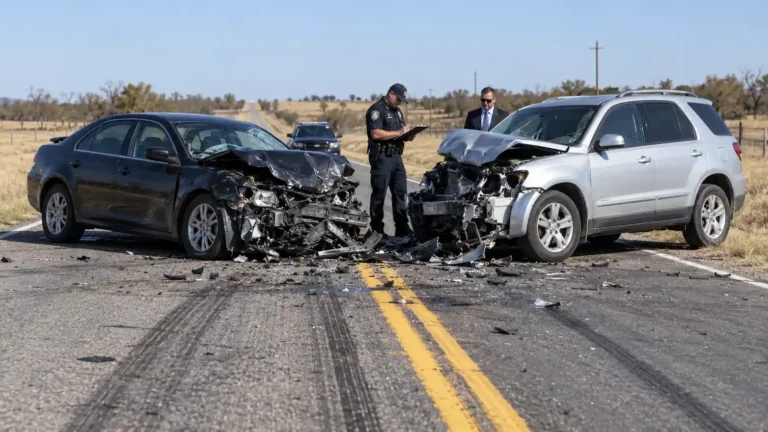


Can you get a concussion from whiplash? Yes, and the answer matters far more than most people realize when they leave an emergency room with a cervical strain diagnosis and nothing else. The physician who documents the neck injury and sends the patient home may never have evaluated the neurological picture. The gap between what was written in that discharge summary and what actually occurred inside the skull is one of the most consequential gaps in any personal injury claim arising from a vehicle collision.
Whiplash is the rapid forward-and-back movement of the head produced by sudden acceleration and deceleration, most commonly in rear-impact collisions. That movement strains the cervical soft tissue, which is the injury most people understand. The same mechanical event also moves the brain inside the skull. When that brain movement disrupts normal neurological function, the result is a concussion. No surface contact is required. Can you get a concussion from whiplash without hitting your head? Clinically and biomechanically, yes.
At Acuña Law Firm, we represent people who suffered traumatic brain injuries after vehicle accidents across Oklahoma, including cases where the concussion was not identified at the initial emergency visit.
Why the Brain Moves When the Neck Snaps
The brain sits suspended in cerebrospinal fluid inside the skull, which gives it a degree of independent movement relative to the skull itself. When the skull accelerates suddenly in one direction and then decelerates or reverses, the brain continues along its original trajectory for a fraction of a second before the fluid and meningeal attachments catch up and arrest the motion.
In a rear-impact collision the sequence is precise: the torso is pushed forward by the seat, the head follows because of the attached cervical spine, the head then snaps backward, and at each directional change the brain absorbs a force that the neck’s rapid movement transferred to the cranial contents. The cervical soft tissue strains from the same event. Both injuries occur simultaneously.
The force needed to produce a concussion through indirect brain movement is substantially lower than what is required to fracture the skull or cause intracranial bleeding. That is why low-impact collisions can generate genuine neurological symptoms while leaving the vehicle with minimal visible damage, and it is why defense experts in accident cases consistently challenge whether the mechanism was sufficient to cause brain injury. Our Oklahoma City brain and spinal injury lawyer page explains how we approach these cases and what a thorough neurological injury evaluation looks like from the first consultation.
Symptoms That Point to Neurological Involvement, Not Just a Neck Strain
The overlap between whiplash and concussion symptoms in the first days after an accident is significant, and it is what allows the neurological component to go undetected. Both produce headache. Both cause dizziness. Both may involve difficulty concentrating and general fatigue. The picture starts to separate when the symptom profile crosses into territory that cannot be explained by cervical soft tissue injury alone: cognitive fog that does not lift after the first week, memory gaps specifically around the time of the collision, sensitivity to light and sound that worsens with activity, sleep disruption, and emotional changes that emerge without an obvious trigger.
Post-accident headache alone can have two distinct clinical origins. Cervicogenic headache arises from the irritated cervical structures and typically starts at the base of the skull and radiates forward. Post-concussion headache arises from neurological disruption and presents differently: more pressure-like, sensitive to light, and variable depending on cognitive load. A treating physician who does not distinguish between the two will attribute all head pain to the neck injury, and the neurological component disappears from the record before anyone realizes it was there.
Cognitive symptoms are the most legally significant category. They affect the person’s ability to work, manage responsibilities, and function in daily life in ways that are real and measurable but not visible during a standard physical examination. Slowed processing speed, difficulty holding concentration, memory gaps, and mental fatigue that deepens with cognitive effort are all recognized features of post-concussion syndrome.
Negative Imaging Does Not Mean No Brain Injury
One of the most important clinical facts for anyone asking can you get a concussion from whiplash is that the CT scan and MRI taken in the emergency room can be completely normal even when a genuine concussion occurred. A concussion is a functional brain injury, not a structural one. The neurons are not severed. The brain tissue shows no gross abnormality. Standard imaging is designed to rule out intracranial bleeding, skull fracture, and severe structural brain injury.
A negative CT does not rule out a concussion. A negative standard MRI does not rule it out either. Advanced neuroimaging, specifically functional MRI and diffusion tensor imaging, can reveal white matter changes and disruptions in neural connectivity that standard imaging cannot capture.
Not every case requires advanced imaging. When concussion symptoms are mild and resolve within weeks, standard imaging and clinical documentation are typically sufficient. When symptoms are persistent, functionally significant, or inconsistent with the expected recovery timeline, pursuing advanced studies is what creates the evidentiary foundation the claim depends on.
Can You Get a Concussion From Whiplash and Have a Valid Liability Claim in Oklahoma
Can you get a concussion from whiplash as a direct result of another driver’s negligence? When the liability evidence is strong, the answer that matters legally is yes, and that is what the liability investigation is designed to establish. In a whiplash concussion case, the investigation carries an additional layer that straightforward cervical injury cases do not: the accident mechanism must be connected not just to the neck injury but to the biomechanical forces specifically capable of producing a concussion.
Accident reconstruction is more consequential in these cases than in cases where the brain injury is structural and self-evident from imaging. The delta-V, the change in velocity during the collision, is the primary variable the biomechanical expert uses to assess whether the forces involved were sufficient to produce the documented neurological symptoms.
Modern vehicles carry event data recorders that capture vehicle speed, brake application, throttle position, and in some cases seatbelt status in the seconds immediately before and after a collision. That data is recoverable and admissible, and it provides the biomechanical expert with the foundational numbers they need to construct the force analysis. Preserving that data requires a formal legal hold on the vehicle before it is repaired, resold, or otherwise altered.
Oklahoma Legal Rights and What the Damages Picture Includes
Oklahoma legal rights in a can you get a concussion from whiplash case cover both the cervical injury and the neurological injury as independent compensable harms with their own damages profiles. A cervical strain that resolves in six weeks generates a categorically different damages calculation than a concussion that produces post-concussion syndrome extending months beyond the accident.
Economic damages in a whiplash concussion case include the medical expenses attributable to the neurological injury separately from those attributable to the cervical injury, lost wages during the full period of disability including any extension caused by the concussion beyond the cervical recovery timeline, and reduced future earning capacity when the concussion produces lasting cognitive limitations that affect the person’s ability to perform their occupation.
Non-economic damages cover the full human scope of what the injury produced: the physical pain of chronic post-concussion headache, the emotional and psychological consequences of a prolonged neurological recovery, and the changes to daily life and personal relationships that post-concussion syndrome generates when it runs into months.
Oklahoma’s modified comparative negligence standard allows recovery even when the claimant bears some responsibility for the accident, as long as that percentage stays below 51 percent. Below that threshold, the recovery is reduced proportionally.
What the Can You Get a Concussion From Whiplash Case Evaluation Reveals
The case evaluation answers whether the injury has been documented in a way that supports the claim, what is missing from the medical record, and what the current evidentiary file can and cannot support in a settlement demand or at trial.
The evaluation starts with the complete medical record from the accident date forward. The emergency record establishes the initial diagnosis and the clinical baseline. Everything after it shapes the claim: follow-up notes that track symptom progression, neurologist or neuropsychologist referrals when cognitive symptoms persist, any neuroimaging beyond the initial CT, neuropsychological testing results, and the treating physician’s documented prognosis for recovery. The completeness and internal consistency of that record is what determines whether a can you get a concussion from whiplash claim holds under scrutiny.
Neuropsychological testing is the most precise tool for documenting cognitive consequences. It measures processing speed, attention, memory, and executive function through standardized batteries that produce quantitative scores comparable to normative data for the person’s age and educational background.
Post-Concussion Syndrome and the Long Damages It Generates
Post-concussion syndrome, when it is present and documented, changes the damages picture in a can you get a concussion from whiplash case more than any other factor. A concussion that resolves fully in four weeks is a different legal case than one that produces a prolonged syndrome affecting cognitive function, emotional stability, and work capacity for months.
When post-concussion syndrome extends the period of disability, the lost wages during the additional weeks or months become separately attributable to the neurological injury beyond what the cervical strain alone would have caused. When the cognitive consequences are permanent or near-permanent, the reduction in future earning capacity becomes a distinct line item requiring forensic economic analysis. When the psychological dimensions of a serious prolonged concussion, including anxiety, depression, and post-traumatic symptoms, are clinically documented by a licensed mental health professional, they become a separately compensable category of non-economic harm.
The combination of documented cervical injury, confirmed concussion, neuropsychological testing results, post-concussion syndrome diagnosis, and a specialist’s prognosis for less than full recovery produces a damages profile that the insurer cannot manage by treating the case as a soft-tissue-only claim.
Before the Insurer’s Offer Settles What the Injury Is Worth
The insurer assigned to the vehicle accident claim will characterize the injury as narrowly as the medical record allows. If the medical record documents only a cervical strain that healed, that is the injury the insurer prices and settles. If the record also documents a concussion with neuropsychological testing results, a specialist’s prognosis, and post-concussion syndrome with functional consequences, the insurer faces a substantially different case with substantially different settlement economics.
Early offers in cases where the concussion has not been fully evaluated are not good-faith reflections of what the injury supports. They are offers calibrated to the incomplete medical record available at the time they are made, extended specifically because accepting them closes the claim before the neurological picture is complete. A signed release at that stage is permanent.
A confidential review of a potential whiplash concussion claim, before any offer is accepted or any release is signed, is what gives the injured person the information they need to make a decision based on what the claim actually supports rather than on what the insurer is willing to pay before the medical evaluation is complete. Reach out to Acuña Law Firm for a direct and confidential evaluation of your whiplash concussion claim before the insurer’s offer shapes a decision that cannot be reversed.
FAQ
Can you get a concussion from whiplash without hitting your head?
Yes. A concussion does not require direct head contact. The rapid acceleration-deceleration of the head during a whiplash event moves the brain inside the skull independently of the skull itself. When that relative movement is sufficient to disrupt normal neurological function, a concussion occurs.
Why does imaging come back normal after a whiplash concussion?
Standard CT and MRI imaging detect structural brain injuries including bleeding, fracture, and tissue damage. A concussion is a functional injury, not a structural one, and standard imaging is not designed to detect the cellular and metabolic disruption that produces concussion symptoms. A negative imaging result does not rule out a concussion.
What Oklahoma legal rights apply to a whiplash concussion case?
Oklahoma personal injury law recognizes the cervical injury and the neurological injury as separate compensable harms with independent damages profiles. Economic damages include medical expenses, lost wages, and reduced future earning capacity when the concussion produces lasting functional limitations. Non-economic damages for pain, suffering, and daily life impact are also recoverable.
What does the can you get a concussion from whiplash liability investigation require?
The liability investigation must connect the accident mechanism to the biomechanical forces specifically capable of producing a concussion, not just cervical injury. Accident reconstruction establishes the delta-V and force direction of the collision. Event data recorder information from the vehicles involved captures the pre-impact and impact conditions.
What does the case evaluation for a whiplash concussion claim include?
The case evaluation reviews the complete medical record from the accident date forward, identifies what neurological testing has been completed and what gaps remain, assesses the treating physician’s prognosis, and evaluates what the current file supports in a settlement demand.