
What Workers’ Compensation Leaves Uncovered
A worker injured on a construction site in Oklahoma has the right to two legal paths at the same time, and most only know about one. A construction accident lawyer works both: workers’ compensation covers medical expenses and partial wage replacement without requiring proof of fault, but a civil claim against parties other than the direct employer can recover full lost wages, pain and suffering, and the permanent impact on earning capacity. Those are categories workers’ comp does not reach, and they frequently represent the largest portion of the claim’s real value.
The structure of an active construction site is what creates that possibility. The injured worker is employed by a subcontractor, operating on a project controlled by a general contractor, on property owned by someone else entirely. If the accident occurred because the general contractor failed to maintain safe conditions, because another company on the site created the hazard, or because a third party’s equipment failed, civil liability exists beyond the direct employment relationship. Identifying those parties and building the argument against each requires an investigation that starts at the accident scene, not in the workers’ comp system.
At Acuña Law Firm, we represent workers injured on construction sites across Oklahoma, including cases where workers’ compensation is already in process and a viable third-party claim also exists. Our Oklahoma City construction accident lawyer page explains how we approach these cases. Every case begins with a confidential evaluation and no commitment required.
When the Site Has Five Companies and Only One Insurer Responds
An active construction site can have five or more separate companies operating the same day. The general contractor supervises the project and controls the overall site conditions. Subcontractors handle specific scopes of work with their own crews. Equipment rental companies own the machinery being used but do not operate it. Suppliers deliver materials under their own terms. Property owners carry obligations about the condition of the land itself.
Each of those relationships can generate independent civil liability when a worker is injured. A construction accident lawyer mapping that web of contracts and safety obligations is not looking for the most obvious responsible party. The investigation focuses on every party whose conduct or equipment contributed to the accident, because liability in these cases is frequently shared and each fraction matters to the total recovery.
The general contractor holds a particular place in that analysis. In Oklahoma, whoever controls a site generally has a duty to maintain reasonably safe conditions for everyone working there, regardless of who employs them directly. That duty does not disappear because the injured worker was on a subcontractor’s payroll. A construction accident lawyer knows the construction accident liability investigation examines how broad that control was, what safety obligations the general contractor assumed under its contract with the property owner, and whether the conditions that caused the accident fell within its sphere of authority.
OSHA Violations as Direct Evidence of Negligence
The Occupational Safety and Health Administration sets mandatory federal standards for construction sites covering fall protection, scaffolding, excavations, confined space entry, personal protective equipment, and heavy equipment operation. An OSHA violation on a construction site is not merely a regulatory infraction. In a civil case in Oklahoma, that violation is direct evidence of negligence.
A construction accident lawyer who reviews the OSHA investigation record following an incident, or who commissions an independent compliance analysis, builds the liability argument on verifiable facts rather than opinions. If a worker fell from height because no fall protection system was in place when the standard required one, the specific regulatory violation anchors the case without requiring anyone to admit wrongdoing. The record establishes it.
Prior inspection histories for the site or the contracting company are public documents that an attorney can request. Those histories may reveal a pattern of repeated violations that shifts the liability argument from isolated negligence toward systemic disregard for worker safety. That pattern can also support a punitive damages argument when the facts show deliberate, documented indifference to known risks.
Evidence That Disappears Before the Worker Leaves the Hospital
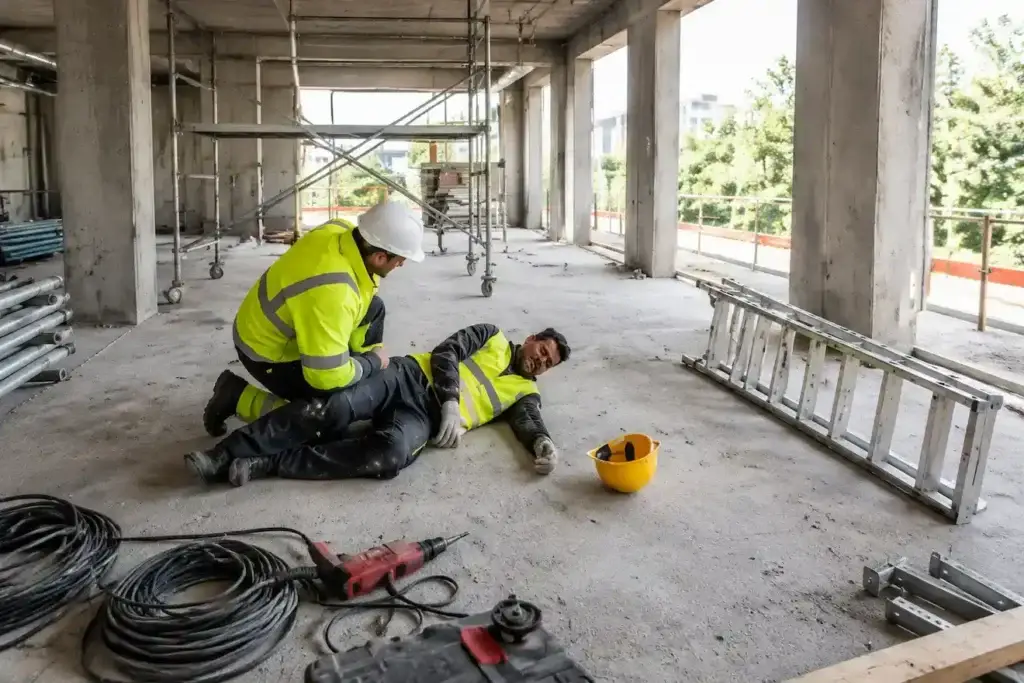
An active construction site does not wait. After a serious accident, the general contractor faces pressure to resume operations, clean the scene, repair what failed, and return to schedule. That process destroys evidence involuntarily but effectively. Preserving site evidence has to begin within hours of the incident, not weeks.
Photographs and video taken on the day of the accident, before any condition is altered, are the most important documents a construction case can have. They show the actual absence of guardrails where they should have been, the equipment in its real state, the visible hazards that should have been addressed. Once the scene is cleared, that visual record cannot be reconstructed.
The tools, equipment, or materials involved in the accident should be physically preserved when possible. If a tool failed, if scaffolding collapsed, if a ladder had a structural defect, the object itself is evidence. Every construction accident lawyer knows that a safety or engineering expert who examines the equipment before any repair or modification produces opinions grounded in direct physical observation, which carry substantially more weight than those based on records or photographs alone.
Construction Accident Compensation Factors That Shape the Claim
A construction accident lawyer considers how the construction accident compensation factors vary based on the severity and permanence of the injuries, the type of work the injured worker performed before the accident, and how many parties share responsibility. A fall from height producing a complex fracture requiring surgery carries a very different damages profile than a soft-tissue injury that resolves without lasting consequences.
Permanent injuries generate two categories of future damages that a civil third-party claim can reach and workers’ comp does not: projected ongoing medical care costs and lost earning capacity. A construction worker who can no longer perform heavy physical labor due to a spinal injury lost access to an employment category that in Oklahoma frequently pays above the state average, with overtime and benefit structures that amplify the long-term economic impact. A forensic economist calculates the present value of that income gap projected over the remaining working years.
Non-economic damages are also recoverable in the civil third-party claim though not in workers’ compensation. The physical pain, emotional suffering, and changes to family and personal life that a serious injury produces are recognized legal categories in Oklahoma. The state does not cap those damages in most personal injury cases, which means the full human impact of the accident can be presented without an artificial limit reducing it before the evidence is evaluated.
Building the Liability Record Before the Defense Writes Its Own Version
The construction accident liability investigation involves reviewing project contracts, drawings, safety logs, training records for the workers present, the maintenance history of the equipment involved, and internal communications from the general contractor about site conditions. Each of those documents can contain the evidence that connects a specific decision by a specific party to the accident.
A contractor who knew certain equipment needed maintenance and deferred it, who skipped required training before starting a high-risk task, or who left known hazardous conditions unaddressed after a supervisor reported them, has a liability profile that goes beyond ordinary negligence. That pattern only becomes visible when the right documents are reviewed before the defense organizes its own narrative.
Witnesses are central to that investigation. Other workers who were on the site the day of the accident may have seen the hazardous condition, reported it without response, or know the history of that particular risk on the project. Reaching them while events are still specific in their memory is a priority that becomes considerably harder weeks later, when crews have rotated to other projects and contact becomes far more difficult.
Settlement Strategy When the Other Side Has Multiple Insurers
Construction accident settlement strategy carries a complexity that single-defendant cases do not. The general contractor says the subcontractor created the hazard. The subcontractor says the equipment rental company delivered defective machinery. The rental company says the operator deviated from protocol. That cycle of blame between parties is a deliberate tactic, and it works when the claimant’s file lacks specific evidence tying each party to its portion of the responsibility.
A construction accident lawyer who arrives at negotiation with a complete evidentiary file does not have to choose a single target. The liability argument is presented against every contributing party with specific supporting evidence for each, and negotiations with multiple insurers can run simultaneously. That position is fundamentally different from the injured worker who arrives without a full file and allows the parties to pass blame indefinitely while the claim loses value with time.
Construction accident settlement strategy also requires clarity about the workers’ comp interaction from the beginning. A well-structured civil claim can reach damage categories the comp system never touches, and structuring the settlement to maximize the worker’s net recovery requires planning from case intake, not at the moment the release is signed.
The Statute of Limitations and the Evidence That Does Not Wait
Oklahoma’s personal injury statute of limitations is two years from the date of injury under Title 12, Section 95 of the Oklahoma Statutes. That applies to civil third-party claims independently of workers’ comp deadlines and does not pause while the comp process continues.
The practical urgency is not the two-year cutoff. It is the loss of evidence that happens in the first weeks after the accident. Scene photographs before conditions are altered, the failed equipment before it is repaired, witness accounts while crews are still on the project, inspection records before they are archived or destroyed under the company’s routine schedule: all of that has an availability timeline far shorter than two years and that is why you need a construction accident lawyer to keep everything moving fast.
A formal evidence preservation demand sent to the general contractor and the other involved companies puts each of them on legal notice that documents and physical evidence relevant to the accident must be retained. Without that demand, each company applies its standard retention schedule and the case record thins without announcement. When a government entity owned the property or was involved in the accident, the Oklahoma Governmental Tort Claims Act imposes an additional one-year written notice requirement before any lawsuit can proceed.
Before Talking to the Contractor’s Insurer
The most consequential decisions in a construction accident case get made in the first weeks, often by people in pain, under financial pressure, and without a clear understanding of their options. A recorded statement given to the general contractor’s insurer without legal counsel can permanently reduce the value of the claim before it is fully understood.
A construction accident lawyer who gets involved early intercepts those decisions before they become problems. The preservation demand goes out before surveillance footage is overwritten. Witnesses are identified before they rotate to other projects. Experts examine the equipment before it is repaired or discarded.
If you or someone in your family was injured on a construction site in Oklahoma and is evaluating options before speaking with any insurer or making decisions about the legal process, reach out to Acuña Law Firm for a free consultation with a bilingual team that serves injured Oklahomans and understands how construction liability works on the ground.
Can I file a civil third-party claim if I already have a workers’ comp claim open?
Yes. In Oklahoma, an injured worker can simultaneously pursue workers’ compensation benefits with their employer and a civil claim against any other party whose negligence contributed to the accident. The two systems operate in parallel. Workers’ comp covers medical expenses and partial wage replacement with the direct employer.
Who can be liable in a construction accident in Oklahoma?
Potentially liable parties include the general contractor who controls overall site conditions, subcontractors whose work or personnel created the hazard, equipment rental companies whose machinery contributed to the accident, manufacturers of defective tools or materials, and in some cases property owners.
What site evidence is most important to preserve after a construction accident?
Photographs and video of the scene before any condition is altered are the most critical. Preserving the equipment or tools involved before they are repaired or discarded, equipment inspection records, site safety logs, project contracts, and contact information for witnesses present are equally important.
What construction accident compensation factors most affect the value of a case?
The severity and permanence of the injuries, the type of work the injured worker performed and their pre-injury earnings, the number of parties sharing responsibility, and whether permanent functional limitations affect earning capacity are the primary factors.
What is the deadline to file a third-party claim after a construction accident in Oklahoma?
Oklahoma’s statute of limitations for personal injury claims is two years from the date of injury under Title 12, Section 95. That applies to civil third-party claims independently of workers’ comp deadlines. When the accident occurred on government property or involved a government entity, the Oklahoma Governmental Tort Claims Act imposes a one-year written notice requirement before any lawsuit can proceed.