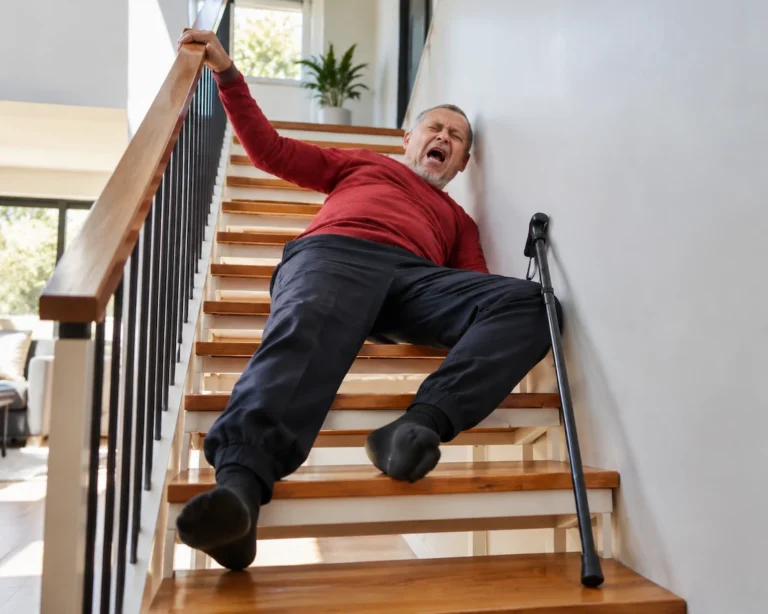

Nobody plans to fall. You were just walking in a store or a parking garage or a restaurant or an apartment hallway, which’s a place you are supposed to be. You were walking the way you always do. Then something went wrong. The floor was wet. You did not see it. Maybe there was a broken step that was broken before you got there. Maybe the property had a problem with water. They did not fix it. It only took a second to fall. Now you are still dealing with what happened, and you need a lawyer for slip and fall.
And then, you probably have a lot of questions. You want to know if you have a case. You want to know if the person who owns the property is to blame. You want to know if it matters that you did not see the thing that made you fall. You want to know if you should call a lawyer for slip and fall or just take what the insurance company is offering.
At Acuña Law Firm, we can help with a lawyer for slip and fall. We know that time is important from the moment you fall, not from the moment you file a claim. Our team acts fast to save the video from cameras, get records of when things were fixed, and find people who saw what happened while they still remember the details.
What the Property Owner Was Legally Obligated to Do
In Oklahoma, the law about premises liability is set up in a way. It depends on why a person’s on someone else’s property. If you are a business invitee, that means you are at a store or something like that. The owner wants you to be there. The owner of the property has to take good care of you. They have to make sure the property is safe for people like you.
The owner has to check the property to find any problems. They have to fix anything that could hurt someone or at least warn people about it until it can be fixed. Oklahoma courts have said that the owner has to be active, not just wait for someone to complain. If someone gets hurt. The owner says they did not know about the problem; that is not a good enough excuse.
The lawyer for slip and fall thinks that if the owner had checked the property as they should have, they would have found the problem. So the question is not what the owner knew. What they should have known if they were taking good care of the property. A lawyer for slip and fall who knows about cases in Oklahoma can use this to challenge theowner’ss excuse that they did not know about the problem.
Oklahoma premises liability law is important for business invitees because it helps keep them safe. The owner’s duty to business invitees is a big part of Oklahoma premises liability law. If you want to understand where your situation stands before making any decisions, our Oklahoma City slip and fall lawyer page explains how we approach these cases in practice.
The Evidence That Holds a Claim Together
A fall scene is not stable. Wet floors are mopped before the shift ends. Broken fixtures are fixed after the incident makes them a problem. Ice patches disappear. The exact conditions that led to the injury might look completely different by the time an official investigation starts. Photos taken on the day of the fall at the scene showing the danger itself, the lack of warning signs, and the area around it are not proof even for a lawyer for slip and fall who is helping the case.
Medical records have their importance. The emergency room record from the day of the fall shows the signs of injury. Later treatment records show how the injury got worse, the problems that came up, the doctors who were called in, the therapy done, the medicine taken, and how the injury changed over time.
Witness stories are important in ways that photos and records sometimes can’t match. A person who saw the fall and can explain what the floor looked like, if there was any sign, and how everything happened gives a lawyer for slip and fall statement that the defense struggles to argue against without appearing to question a calm observer.
When the Insurance Company Gets Involved
General liability policies cover bodily injury claims arising from property conditions, and in most commercial slip and fall cases that coverage is where the claim begins. The adjuster assigned to handle it is experienced, specifically experienced in finding reasons to pay less. That is not a characterization of bad faith. It is the job description, and understanding it shapes how every interaction with that adjuster should be approached.
Slip and fall insurance coverage issues tend to surface around the same disputes in most cases. Whether the property had adequate notice of the hazard. Whether the injured person shares any comparative fault and, if so, how much. Whether the treatment was medically necessary and proportionate to the documented injuries.
When the property involves multiple parties, the coverage picture becomes considerably more complex. A tenant operating a business in a leased retail space may carry their own general liability policy separate from the building owner’s. A janitorial contractor whose crew mopped the floor thirty minutes before the fall may have their own commercial insurance. A property management company handling maintenance under a contract with the landlord may have coverage that applies independently.
The Deadline That Does Not Move and the Evidence That Will Not Wait
Oklahoma’s statute of limitations for personal injury claims is two years from the date of injury under Title 12, Section 95 of the Oklahoma Statutes. That deadline is absolute. Courts do not extend it because the injured person was unaware of it, was dealing with medical treatment during that period, or believed the claim might resolve without formal legal action from lawyer for slip and fall. Missing it ends the claim permanently, regardless of how strong the underlying facts are.
The practical urgency, though, is not the two-year cutoff. It is the evidence retention timeline, which runs on a completely different and much shorter schedule. Surveillance footage at most commercial properties is overwritten on cycles ranging from seventy-two hours to thirty days, depending on the storage system and the property’s internal policy.
Fault Arguments the Defense Will Raise
Oklahoma’s modified comparative negligence standard allows the defense to attribute a portion of the fault to the person who fell, and that attribution reduces the claimant’s recovery proportionally. Fault at or above 51 percent eliminates recovery. Lawyer for slip and fall defense teams use this framework deliberately and consistently, which is why most contested premises liability cases involve arguments about what the claimant was doing at the moment of the fall.
The open and obvious doctrine is one of the most common defenses. If the property owner can establish that the hazard was clearly visible and that a person exercising ordinary care would have noticed and avoided it, that argument supports reducing or eliminating the owner’s liability. How effectively that argument works depends heavily on the actual conditions at the scene, the lighting, the foot traffic, the nature of the hazard, whether warning signs were present, and the specific circumstances of the fall.
A lawyer for slip and fall who has investigated those conditions with photographs and witness accounts is in a far stronger position to challenge that argument than one working from a description of events provided weeks after the scene changed.
What the Damages Actually Include
Compensation in a premises liability case starts with the economic losses and extends considerably further. Medical bills from the emergency visit, the follow-up appointments, the imaging, the physical therapy, and the specialist consultations are the foundation. Lost wages from the time the person could not work are part of the calculation.
When the injury results in a permanent limitation that restricts the person’s ability to return to their previous work, the reduction in future earning capacity becomes a damages category of its own, one that requires a lawyer for slip and fall expert projection to calculate with any credibility.
Non-economic damages cover the harm that does not come with an invoice. Chronic pain that persists beyond the acute recovery period and changes the quality of daily life. The physical limitation that prevents someone from doing things they did before, playing with their children, working in the yard, carrying groceries, returning to a hobby that had been part of their life for years. Emotional distress that develops as a secondary consequence of living with ongoing pain or permanent restriction.
Punitive damages are available in cases where the property owner’s conduct reflects something beyond ordinary negligence, a deliberate disregard for safety, a pattern of ignoring known hazards despite documented complaints, or falsified inspection records. The threshold for punitive damages under Oklahoma law is higher than the threshold for compensatory damages, and whether the facts of a given case reach it is something a lawyer for slip and fall evaluates carefully before raising that theory. When the facts support it, though, it changes the financial stakes of the case meaningfully.
Before That Offer Expires or That Form Gets Signed
The period between the fall and any final resolution is when the most consequential decisions tend to get made, often by people who are in pain, dealing with medical appointments, falling behind on bills, and looking for any version of this that just ends. An early settlement offer from a property owner’s insurer can feel like exactly that. It rarely reflects the full scope of the claim, and accepting it with a signed release closes the case permanently, regardless of what develops afterward.
A lawyer for slip and fall helps. Understanding what the claim is actually worth requires knowing the complete picture: the full extent of the injuries, the cost of treatment that has occurred and treatment that is still ahead, the impact on the ability to work, and the non-economic harm that is harder to quantify but no less real. That picture is not available in the first two or three weeks after a fall, which is precisely when insurers tend to make their first offers. The timing is not coincidental.
Getting a clear and honest assessment from a lawyer for slip and fall of what the legal process would actually look like, what evidence exists, what it supports, and what options remain open is something that can be addressed in a confidential consultation before any decision is made. If you or someone close to you was hurt in a fall on someone else’s property in Oklahoma, reach out to Acuña Law Firm and get that conversation started before a signature or a deadline changes what is still possible.
FAQ
How does a lawyer for slip and fall prove the property owner knew about the hazard?
Establishing owner notice requires showing either that the property owner was directly aware of the dangerous condition before the fall, or that the condition existed long enough that a responsible inspection would have revealed it.
What is the slip and fall filing deadline in Oklahoma?
Oklahoma’s statute of limitations for personal injury claims is two years from the date of injury under Title 12, Section 95.
Can I recover compensation if the defense argues I was partially at fault?
Oklahoma’s modified comparative negligence standard permits recovery when the claimant’s share of fault is below 51 percent, though the damages award is reduced in proportion to that percentage.
What slip and fall insurance coverage issues typically arise in commercial cases?
Most commercial premises liability claims run through the property owner’s general liability policy, but disputes arise regularly over whether the owner had timely notice of the hazard, the extent and necessity of the medical treatment, and the claimant’s comparative fault.
What should I do immediately after a slip and fall to protect the claim?
Photograph the hazard and surrounding area before anything is cleaned or repaired. Get the names and contact information of anyone who witnessed the fall.